Laminate vs Acrylic vs PU Kitchen Shutters: Which Finish Lasts Longest?
Quick Answer: Comparing laminate vs acrylic vs PU kitchen shutters comes down to priorities. PU (polyurethane) finish offers the best scratch and humidity resistance, making it the strongest choice for high-use kitchens, though it costs the most. Acrylic finish gives the highest-gloss, most premium look but scratches more easily and shows fingerprints. Laminate is the most budget-friendly and holds up well to daily wear, though it doesn't match acrylic's showroom shine. For most Gurgaon kitchens with regular daily cooking, laminate or PU outperform acrylic on long-term durability.
What Are Laminate, Acrylic, and PU Kitchen Shutters?
Before comparing performance, it helps to know what you're actually choosing between — these three finishes are built very differently, which is exactly why they age so differently.
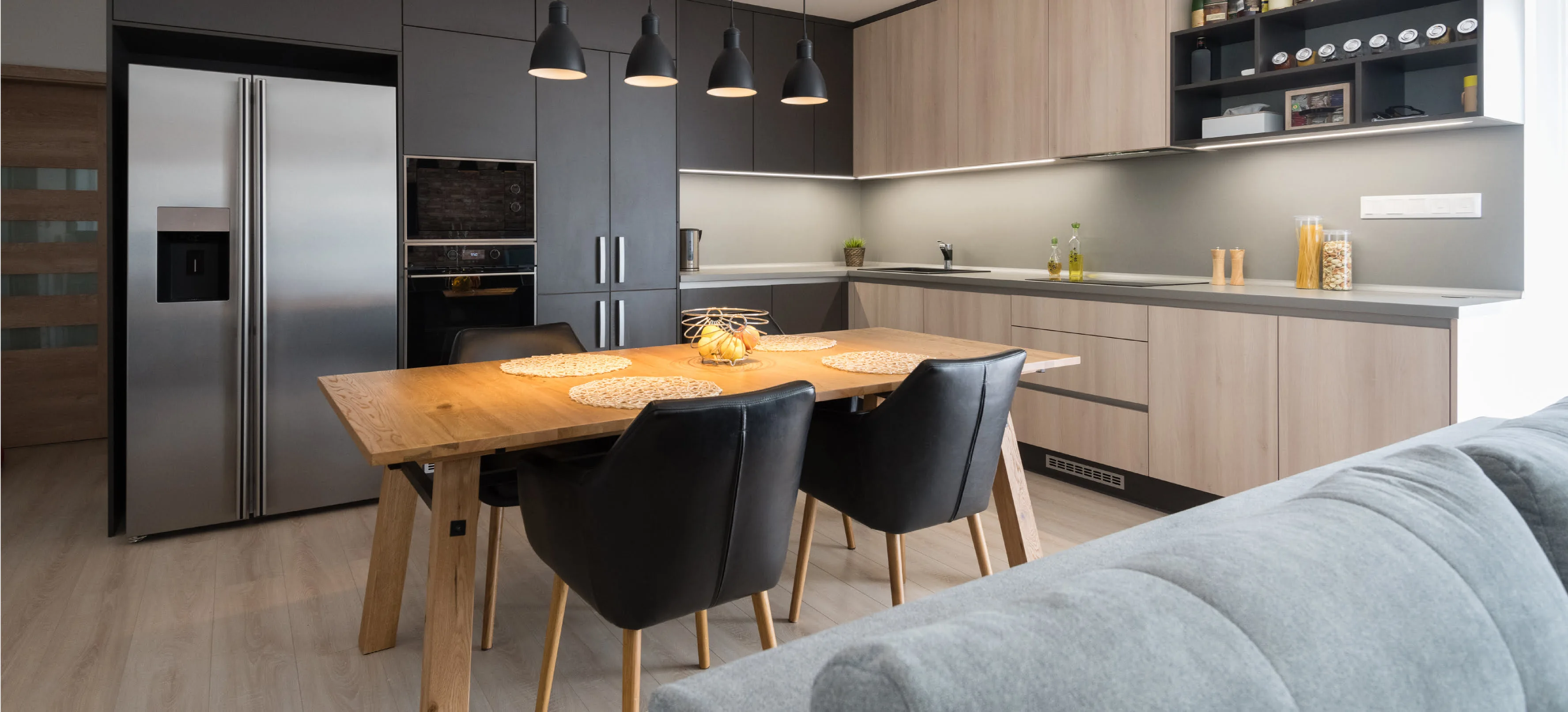
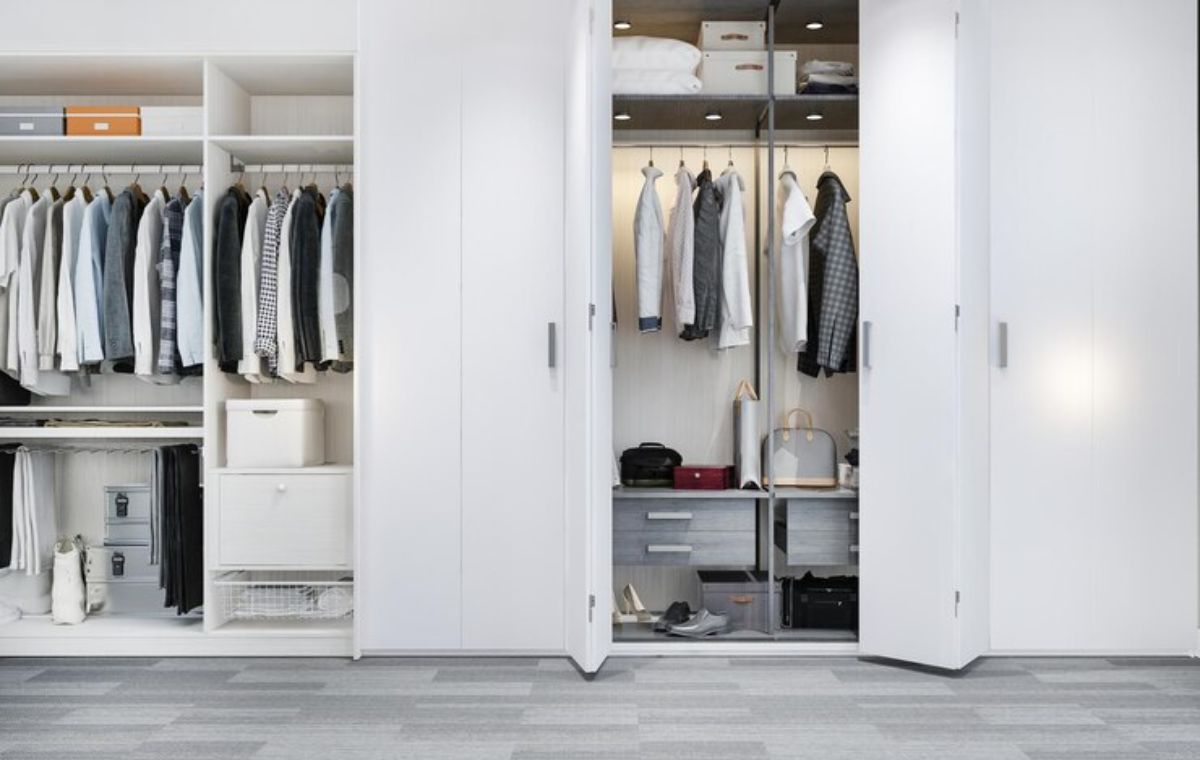
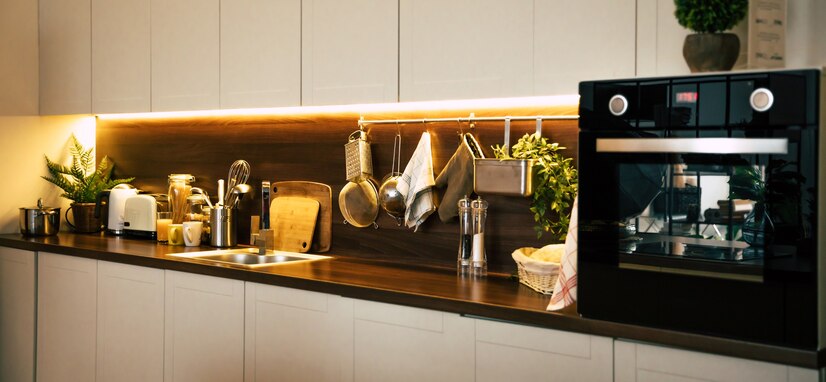
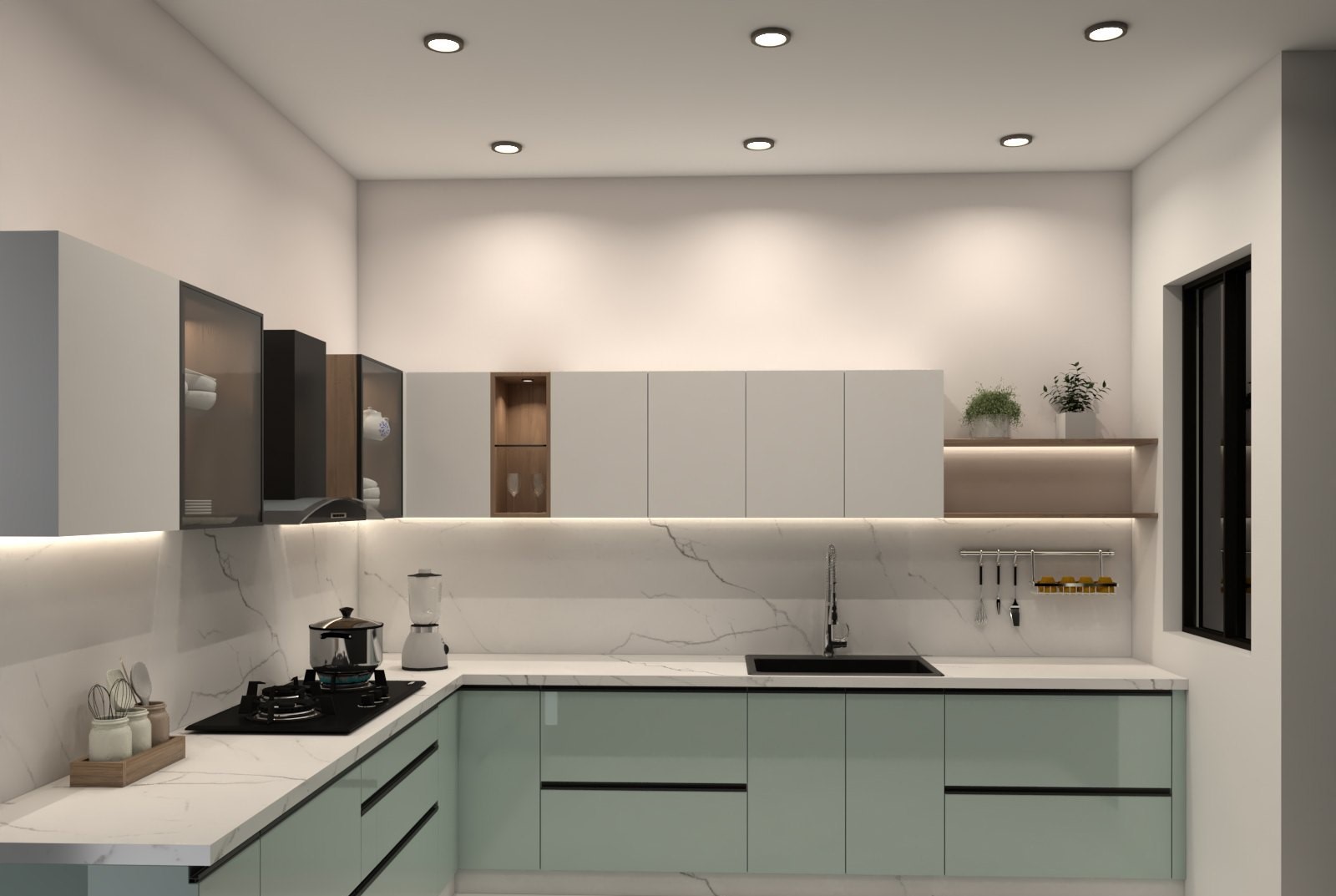
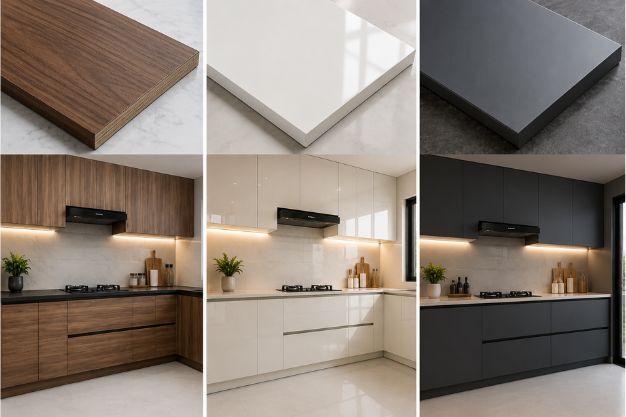
- Laminate is a thin, high-pressure decorative sheet (HPL) bonded onto a shutter base like plywood, MDF, or HDHMR. It's the most widely used finish in Indian modular kitchens because it's durable, comes in the widest range of colours and textures, and is relatively easy to repair or replace.
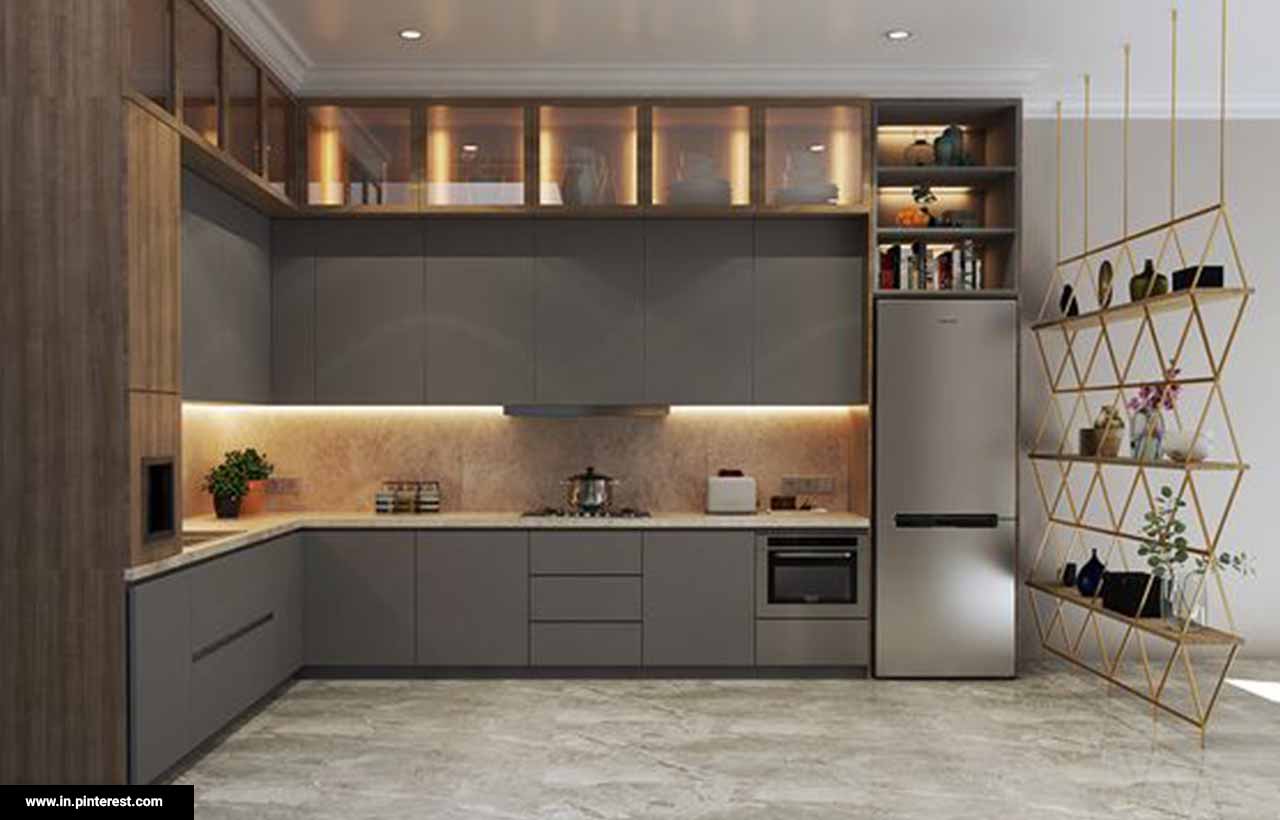
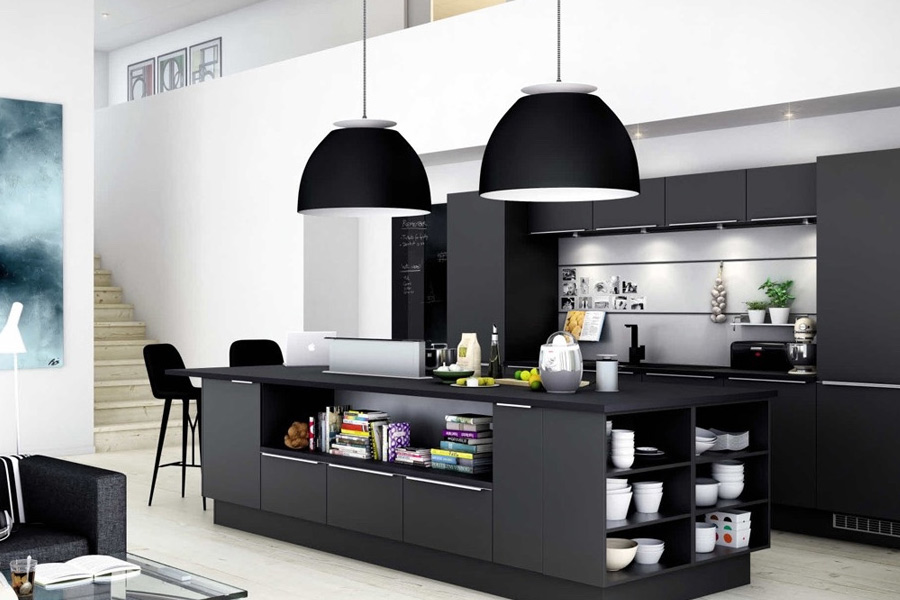
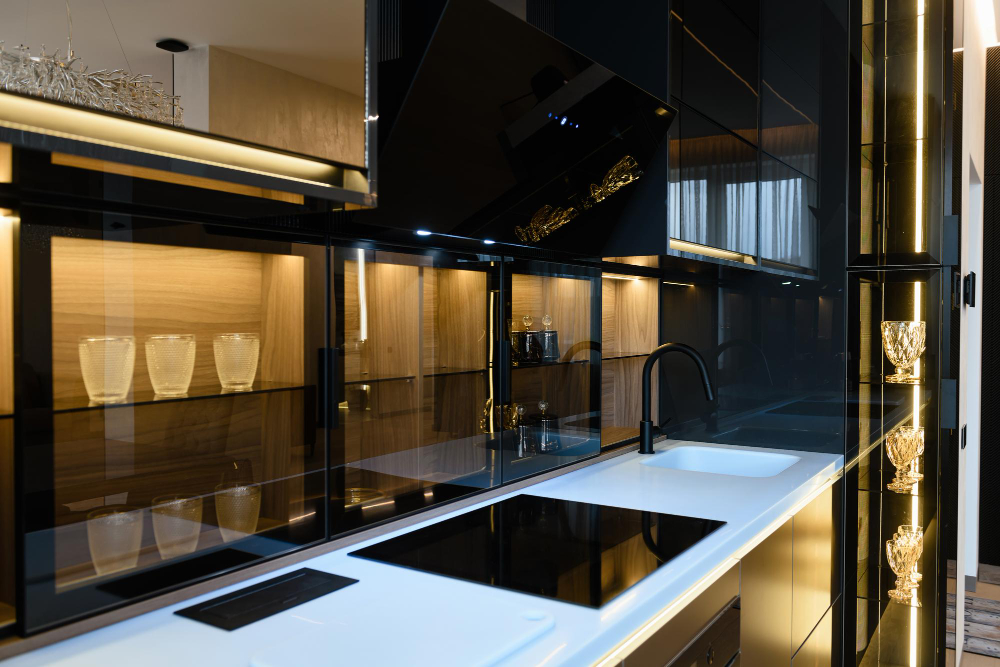
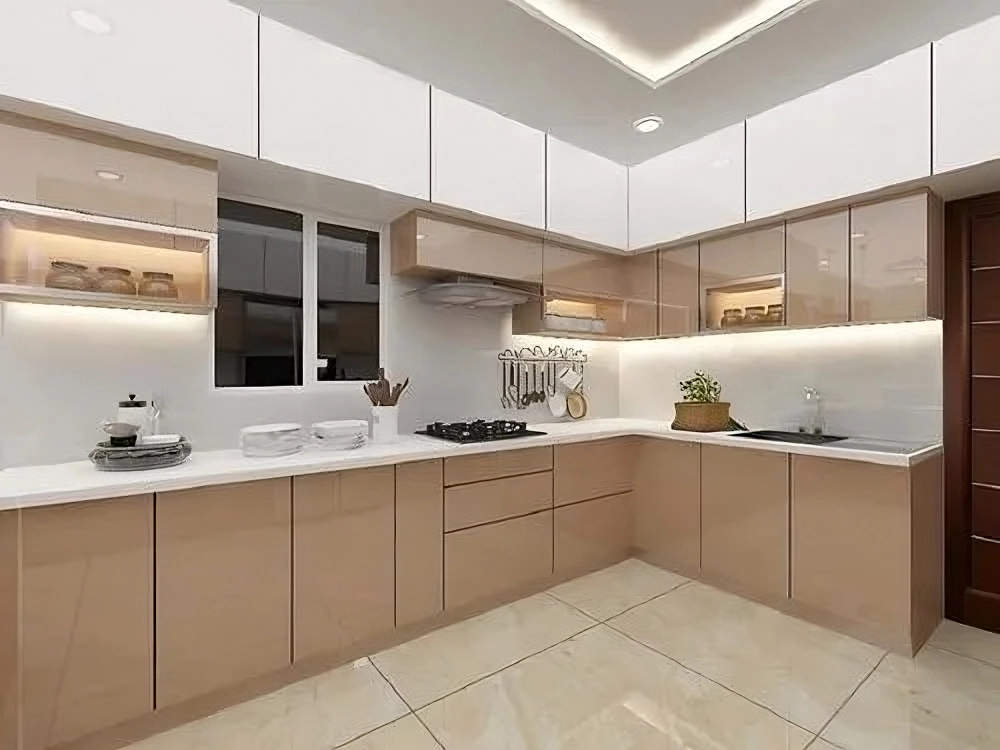
- Acrylic finish is a high-gloss acrylic sheet pressed onto the shutter substrate, giving cabinets a mirror-like, reflective surface. It's popular for its premium look and its ability to make small kitchens feel brighter and more spacious, but the glossy surface is more prone to visible scratches and fingerprints over time.
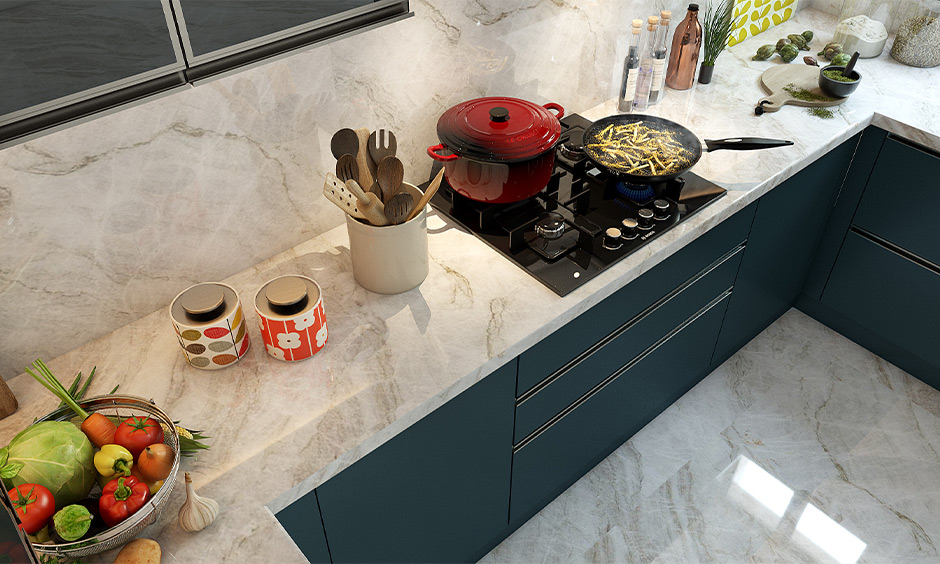
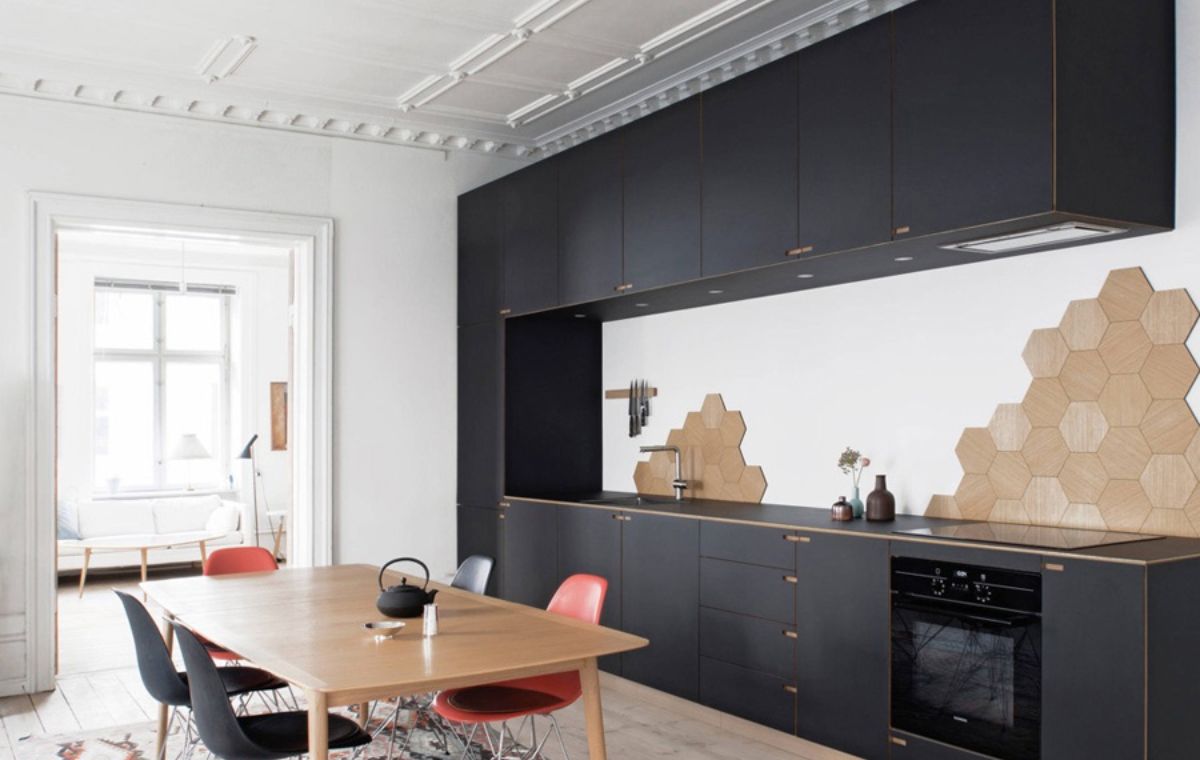
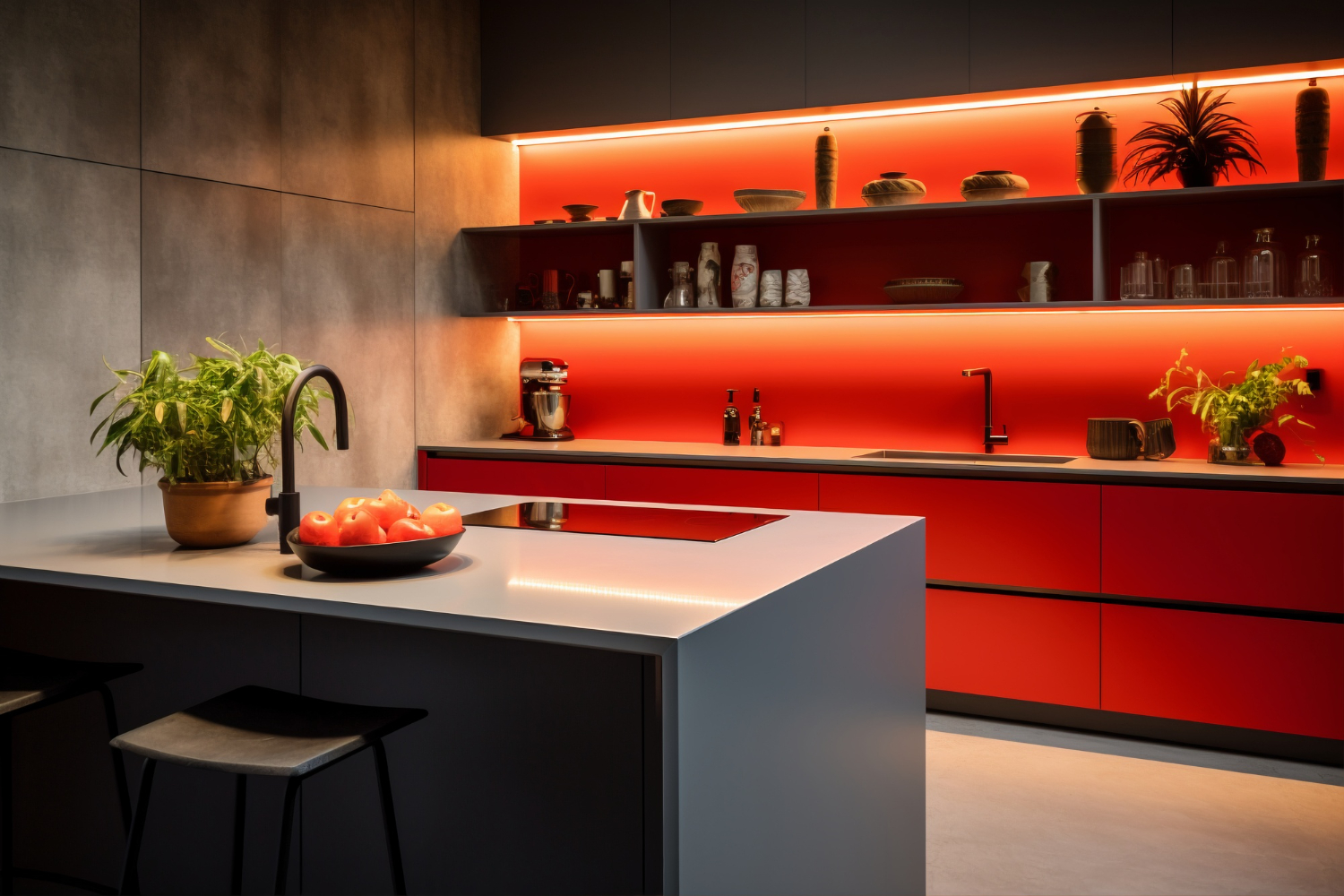
- PU (polyurethane) finish is a sprayed or painted coating applied directly onto the shutter surface. Because it's painted rather than layered as a sheet, PU can achieve seamless curves and edges that laminate and acrylic can't, and it holds up especially well against moisture, which is a big factor in humid, monsoon-heavy cities.
Laminate vs Acrylic vs PU: Full Comparison Table
|
Factor |
Laminate |
Acrylic |
PU |
|
Relative cost |
₹ (Most affordable) |
₹₹ (Mid-to-premium) |
₹₹₹ (Highest) |
|
Gloss level |
Matte to semi-gloss |
High gloss, mirror-like |
High gloss to matte, both available |
|
Scratch resistance |
High |
Low to medium |
High |
|
Humidity/moisture resistance |
Medium |
Medium |
High |
|
Fingerprint visibility |
Low |
High |
Low to medium |
|
Maintenance |
Easy, wipe-clean |
Needs frequent cleaning |
Easy, wipe-clean |
|
Repairability |
Easy — sheet can be replaced |
Moderate |
Harder — full re-spray usually needed |
|
Approx. lifespan |
8–10 years |
6–8 years |
10–12 years |
|
Best suited for |
Budget and high-traffic family kitchens |
Showpiece kitchens, lower daily wear |
Humid climates, heavy daily cooking |
Durability in Gurgaon's Climate: Why It Matters More Than the Showroom Look
A finish that looks flawless under showroom lighting can behave very differently after a monsoon season in NCR. Gurgaon sees high humidity for several months a year, along with heavy dust from ongoing construction across the city — both of which stress-test a kitchen shutter far more than everyday cooking alone.
- Humidity and swelling risk: Acrylic and laminate shutters both rely on adhesive bonding at the edges, which is where moisture tends to creep in first if the edge-banding isn't sealed properly. PU finish is applied as a continuous coating without seams, which gives it an edge in consistently humid conditions.
- Dust and pollution film: Matte and semi-gloss laminate finishes tend to hide dust film better between cleanings than high-gloss acrylic, which shows every fingerprint and smudge almost immediately, something to weigh heavily if your kitchen faces a busy road or is close to ongoing construction.
- Layout matters too: An open kitchen near a balcony or ventilated area will see more humidity swings than a fully enclosed, air-conditioned kitchen, which can shift the calculation toward PU or laminate over acrylic, even if acrylic was the original preference for its look.
Read also: Perfect Kitchen Shutters: A Guide to Durability and Style
Which Finish Fits Which Kitchen?
- Budget-conscious, high-traffic family kitchen: Laminate offers the best balance of cost, durability, and daily-use resistance, most Indian households doing regular home cooking will get the longest practical life out of it for the money.
- Showpiece kitchen, lower daily wear, entertaining-focused: Acrylic delivers the glossy, high-end look that photographs well and impresses guests, as long as you're prepared for more frequent cleaning.
- Humid climate, heavy daily cooking, longevity as the priority: PU finish is worth the higher upfront cost if you want the shutters to still look new a decade in, especially in Gurgaon's monsoon months.
- Mixed approach: A common and cost-effective strategy is to use PU or acrylic on visible, high-impact shutters (like base cabinets facing the entrance) and laminate on less-visible runs like tall units or the inside of a pantry, you get the premium look where it counts without paying premium pricing across the entire kitchen.
What Actually Drives the Price Difference
The gap between laminate, acrylic, and PU comes down to a few factors beyond the finish itself:
- Substrate quality: All three finishes can be applied over MDF, HDHMR, or BWP plywood — but the base material affects both cost and durability as much as the finish does. A premium PU finish over a low-grade substrate won't perform as well as laminate over BWP plywood.
- Application method: Laminate and acrylic are pre-manufactured sheets bonded to the shutter, which keeps labour costs more predictable. PU is sprayed or painted on-site or in a factory booth, which adds skilled-labour cost, especially for custom colours or curved shutters.
- Brand and import status: Locally sourced laminate is the most price-stable of the three. Acrylic and PU costs can swing significantly if you opt for imported sheets or speciality colour-matching.
- Kitchen size and layout complexity: More running feet of shutters, taller units, and curved or angled cabinetry all add cost regardless of which finish you choose, but the gap between finishes widens as the kitchen gets larger, since PU's labour-intensive application scales with surface area more than laminate's does.
Because pricing varies by these factors and by current market rates, the most reliable way to get real numbers for your kitchen is a personalised estimate rather than a generic size-based table. Use our Kitchen Cost Calculator to get a figure based on your actual layout and finish preference, or book a consultation for a detailed quote.
Conclusion
There's no single "best" finish, only the best finish for how you actually use your kitchen. If durability and humidity resistance top your list, PU finish is the strongest long-term performer. If budget and everyday practicality matter most, laminate remains the smartest default for the vast majority of Indian kitchens. If you want a showroom-level glossy look and don't mind extra upkeep, acrylic delivers the most visual impact per rupee spent upfront.
Not sure which finish fits your kitchen and cooking habits? Book a consultation with Novella Kitchens and we'll help you match the right finish to your layout, budget, and daily routine.
Frequently Asked Questions
Q1. Is PU finish worth the extra cost over laminate?
If your kitchen sees heavy daily cooking and you're in a humid city like Gurgaon, PU's added durability and moisture resistance usually justify the higher upfront cost over a 10+ year timeframe. For lighter use or tighter budgets, laminate remains the more practical choice.
Q2. Does acrylic finish scratch easily?
Yes, relative to laminate and PU, acrylic is more prone to visible surface scratches and fingerprints because of its high-gloss surface. It's better suited to kitchens with lower daily wear or households willing to clean more frequently.
Q3. Which kitchen shutter finish is best for humid climates?
PU finish generally performs best in humid climates because it's applied as a seamless coating with no edge joins for moisture to penetrate, unlike sheet-based laminate and acrylic finishes.
Q4. Can laminate and PU be mixed in the same kitchen?
Yes, many homeowners use PU or acrylic on visible base shutters and laminate on tall units or less-visible cabinetry to balance cost and appearance without sacrificing the premium look where it matters most.
Q5. How long does an acrylic kitchen finish last?
Acrylic finishes typically last around 6–8 years with regular use before showing visible wear, compared to 8–10 years for laminate and 10–12 years for PU, though actual lifespan depends heavily on maintenance and daily kitchen use.
Q6. Which finish is easiest to clean and maintain?
Laminate and PU are both low-maintenance and wipe clean easily. Acrylic requires more frequent cleaning to keep its glossy surface free of fingerprints and smudges.