What Is a Carcass in a Modular Kitchen? Materials & Guide
What Is a Carcass in a Modular Kitchen? A Complete Guide to Materials, Thickness & Durability
Quick Answer
A kitchen carcass is the box-shaped structure of a cabinet, the back panel, two sides, top, and bottom that hold everything together once the shutters, handles, and countertop are removed. You may also see it spelt “carcase,” or referred to as a cabinet carcass or modular kitchen carcass. It's completely hidden once your kitchen is installed, yet it's the single biggest factor in how many years your kitchen actually lasts.
Table of Contents
- What Does “Carcass” Mean in a Modular Kitchen?
- Carcass vs. Shutter: What's the Difference?
- What Materials Are Used to Make a Kitchen Carcass?
- Plywood (BWP / Marine)
- MDF
- HDHMR
- Particle Board
- WPC
- Carcass Material Comparison Table
- Why Does Carcass Material Matter More Than Shutter Material?
- What Is the Standard Carcass Thickness for Modular Kitchens?
- What Color or Finish Does a Carcass Typically Come In?
- How Is a Modular Kitchen Carcass Manufactured?
- How Do I Choose the Right Carcass Material for My Kitchen?
- Carcass Quality Checklist: What to Ask Your Kitchen Manufacturer
- Frequently Asked Questions
What Does “Carcass” Mean in a Modular Kitchen?
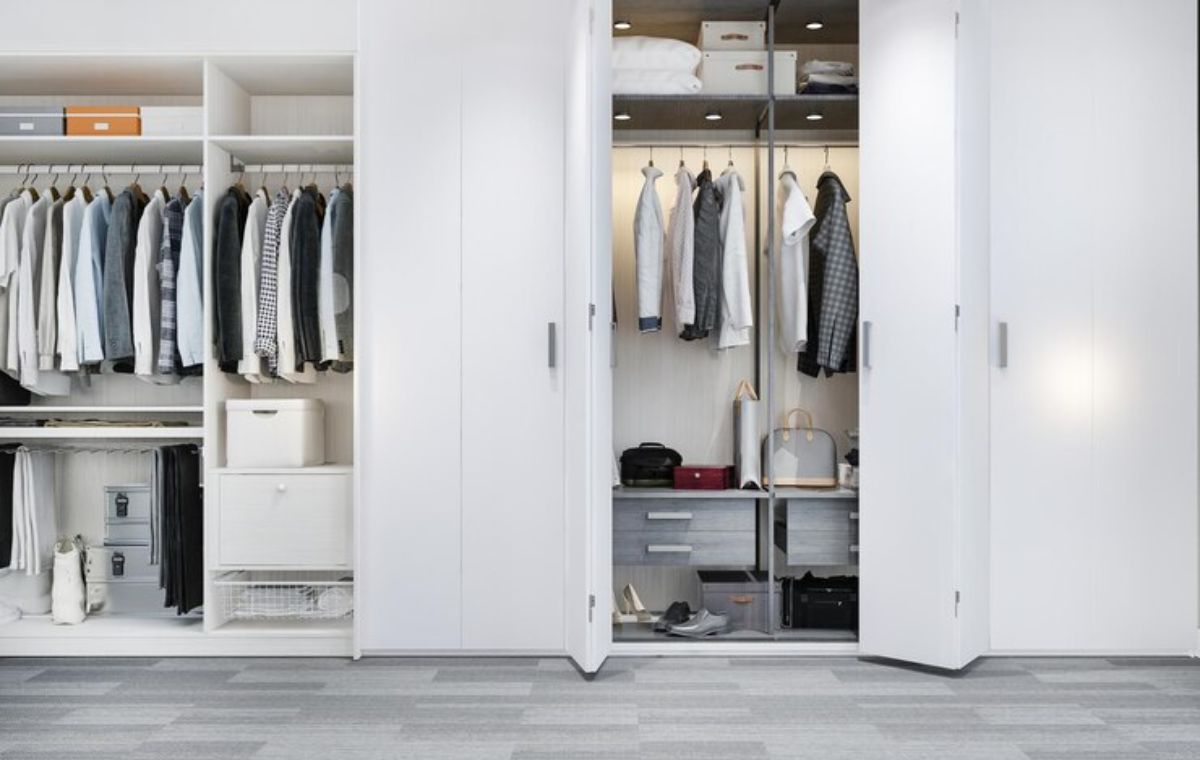
Strip away the shutters, handles, and countertop from any kitchen cabinet, and what's left is the carcass, an open box made up of a back panel, two side panels, a top, a bottom, and usually a few internal shelves. That box is what everything else attaches to.
The term itself comes from traditional cabinetmaking, where “carcase” (an older British spelling still common in joinery and furniture trades) described the basic framework of a piece before any doors, drawer fronts, or decorative work were added. In Indian modular kitchens, carpenters, designers, and manufacturers use “carcass” and “carcase” interchangeably; both refer to the same structural shell.
A simple way to picture the carcass in kitchen cabinetry: if your cabinet were a house, the carcass is the walls, floor, and roof. The shutters are just the front door and windows, important for how the house looks, but not what's holding it up.
Carcass vs. Shutter: What's the Difference?
The carcass is the structural box; the shutter is the door or front panel fixed onto that box.
This distinction gets lost easily because most kitchen brochures and showroom displays lead with shutter finishes, high-gloss laminate, acrylic, PVC membrane, and so on — since that's what catches the eye. The cabinet carcass, sitting behind those doors, rarely gets more than a passing mention.
Why this matters when you're comparing quotations:
• Shutters are relatively easy and affordable to replace later if they get scratched, damaged, or simply go out of style.
• The carcass cannot be swapped without dismantling the entire cabinet; it's a decision you live with for the life of the kitchen.
If two quotations look similar on price but one specifies a higher-grade carcass material, that's the one more likely to hold up over a 10–15-year horizon. For a closer look at how shutter materials stack up against each other, see our guide on Wood vs. PVC for Modular Kitchen Cabinets.
What Materials Are Used to Make a Kitchen Carcass?
Most modular kitchen carcasses in India are built from one of five board types. Each strikes a different balance between cost, moisture resistance, and how long it holds up under daily kitchen conditions, steam, spills, and humidity included.
Is Plywood Good for a Kitchen Carcass? (BWP / BWR / Marine Plywood)
Yes, and it's widely considered the benchmark for modular kitchen carcasses in India. Plywood is made from thin layers of wood veneer glued together in alternating grain directions, which gives it strong screw-holding ability, important for hinges, drawer runners, and channels that take repeated daily stress.
For kitchens specifically, look for BWP (Boiling Waterproof) or marine-grade plywood, both treated to resist the moisture, steam, and occasional spills that are part of everyday cooking. It costs more than other board options, but it's the most forgiving material if water gets near the carcass, which, near a sink or dishwasher, it eventually will.
What Is MDF, and Is It Suitable for a Cabinet Carcass?
MDF (Medium-Density Fibreboard) is made by compressing wood fibres with resin under heat and pressure, producing a dense, smooth, and uniform board. It machines cleanly, takes paint and laminate finishes evenly, and costs less than plywood.
The trade-off is moisture sensitivity, standard MDF can swell or lose its shape if it stays wet for extended periods. It works well for cabinet carcasses in drier areas of the kitchen, such as wall units away from the sink, but isn't the first choice for base units directly under a wet zone unless it's a moisture-resistant grade.
What Is HDHMR, and Why Is It Gaining Popularity?
HDHMR (High-Density High Moisture Resistance) board is essentially an upgraded version of MDF, manufactured at higher density and treated specifically to resist moisture and termites. It holds screws better than standard MDF and tends to perform closer to plywood in humid conditions, while staying lighter on the wallet than premium marine ply.
It's increasingly used as a mid-to-premium carcass option in Indian modular kitchens, particularly where homeowners want better moisture resistance than MDF without stepping all the way up to BWP plywood pricing.
Can Particle Board Be Used for a Modular Kitchen Carcass?
Particle board (sometimes called chipboard) is made from compressed wood chips and resin. It's the most budget-friendly carcass option and is widely used in entry-level modular kitchens.
Its main limitation is moisture resistance; untreated particleboard can swell and weaken if exposed to water repeatedly. Moisture-resistant (MR-grade) particle board improves on this, but it's still generally best kept away from sink units, dishwasher housings, and other high-moisture zones.
What Is WPC, and When Should You Use It for a Carcass?
WPC (Wood Polymer Composite) is a fully waterproof board made from a blend of wood fibres and polymer. Unlike plywood or MDF, it doesn't absorb water at all, which makes it the strongest option for areas that are guaranteed to get wet, the cabinet directly under the sink being the most common example.
It's heavier than other boards and typically used selectively (for the sink base unit, for instance) rather than for an entire kitchen, often alongside plywood or HDHMR carcasses elsewhere.
Carcass Material Comparison Table
A quick side-by-side view of how the five most common carcass materials compare:
|
Material |
Moisture Resistance |
Durability |
Termite Resistance |
Relative Cost |
Best Suited For |
|
Plywood (BWP / Marine Grade) |
High |
12–15+ years |
High (treated) |
High |
Whole-kitchen carcass, especially near sinks and wet zones |
|
HDHMR |
High |
10–12 years |
High |
Medium–High |
Mid-to-premium kitchens want plywood-like performance at a lower cost |
|
MDF |
Low–Medium |
7–10 years |
Medium |
Medium |
Wall units and dry areas away from the sink |
|
Particle Board (MR Grade) |
Low–Medium |
5–8 years |
Low–Medium |
Low |
Budget kitchens and dry storage units |
|
WPC |
Very High (waterproof) |
12–15+ years |
Very High |
High |
Sink base unit and other constant-wet zones |
Why Does Carcass Material Matter More Than Shutter Material?
Because nearly every common modular kitchen complaint traces back to the carcass, not the shutter.
Sagging shelves, drawers that stick or won't close properly, hinges pulling loose from the board, and panels that swell or bow near the sink are carcass problems. A low-grade board can look identical to a premium one on installation day; the difference only shows up after a year or two of daily use, by which point replacing it means dismantling the unit.
Shutters, by contrast, are largely cosmetic and replaceable. If you're going to spend more on one part of your kitchen, the carcass is where that money does the most long-term work. For more on how to spot and fix the issues that under-spec carcasses tend to cause, see our post on common kitchen problems and how to address them.
What Is the Standard Carcass Thickness for Modular Kitchens?
18mm is the standard thickness for the structural carcass, the back, sides, top, and bottom of base and wall units, in most Indian modular kitchens. This thickness gives hinges and drawer channels enough material to grip securely and keeps shelves from flexing under the weight of utensils, crockery, and groceries.
16mm boards are sometimes used for shutters, internal shelves, or drawer bottoms, where the load-bearing demands are lower. If you're comparing quotations, “18mm carcass” should specifically refer to the load-bearing panels; ask your manufacturer to confirm where 16mm is used instead, since this is sometimes a quiet cost-cutting substitution. For more on how thickness ties into accessory and basket sizing, take a look at our guide to modular kitchen basket types and sizes.
What Color or Finish Does a Carcass Typically Come In?
White or ivory laminate is the industry-standard interior finish for modular kitchen carcasses, and there's a practical reason for it: a light interior makes it easy to see what's stored inside cabinets and drawers, and it doesn't compete visually with the shutter colour or countertop you've chosen for the exterior.
Carcass boards usually come either pre-laminated (the laminate is bonded to the board at the factory before cutting) or post-laminated (the laminate is applied after the board is cut and assembled). Pre-laminated boards tend to have more consistent finish quality. Either way, the board's cut edges should be sealed with edge-banding, a thin strip of matching laminate glued along the exposed edges, since unsealed edges are where moisture gets in first.
How Is a Modular Kitchen Carcass Manufactured?
In a factory setting, carcass production generally follows four steps: cutting the boards to size, edge-banding the exposed edges, drilling precise holes for hinges and drawer hardware (usually on CNC machines for accuracy), and assembling the panels into the finished box.
The precision of that drilling step matters more than it might seem, hinges and drawer runners that aren't drilled at exactly the right position cause doors that don't align and drawers that don't glide smoothly, regardless of how good the board material itself is.
This is one of the reasons manufacturing setup matters when you're comparing modular kitchen manufacturers in Gurugram or anywhere else in Delhi NCR. At Novella Kitchens, carcass cutting and drilling is done on German Homag and Altendorf machines at our 11,000 sq. ft. Gurgaon facility, with each unit passing through a 50-point quality check before it leaves the factory. If you're exploring Modular Kitchen Designs in Gurgaon, it's worth asking any manufacturer you shortlist what machinery they use for this step, it's a good proxy for how consistent the carcass quality will be across your entire kitchen.
How Do I Choose the Right Carcass Material for My Kitchen?
Four practical factors should drive this decision more than brand names or showroom samples:
- Budget. Particleboard and standard MDF sit at the entry level, HDHMR in the mid-range, and BWP plywood and WPC at the premium end. There's no universally “correct” choice; the right material depends on which of the other three factors matters most for your kitchen.
- Climate and humidity. Delhi NCR's monsoon humidity and seasonal temperature swings put more stress on moisture-sensitive boards than a drier climate would. In this region, it's worth prioritising moisture resistance even if it means a slightly higher budget for the carcass.
- Proximity to wet zones. Regardless of what material you choose for the rest of the kitchen, the cabinet directly under the sink should use a fully waterproof option like WPC or BWP plywood; this is the one zone where moisture exposure isn't occasional; it's constant.
- Usage patterns. A kitchen that sees heavy daily use, large families, frequent cooking, fully loaded drawers and pull-out baskets- puts more strain on screw-holding and load-bearing capacity, which favours plywood or HDHMR over particleboard.
Carcass Quality Checklist: What to Ask Your Kitchen Manufacturer
Before signing off on a quotation, it's worth getting clear answers on:
- What exact carcass material and grade is specified — not just “plywood,” but the BWP/BWR/IS marking, or the specific HDHMR/MDF grade
- What thickness is used for the structural carcass versus shutters and shelves
- What edge-banding material and adhesive are used, and whether all cut edges are sealed
- Whether the carcass under the sink unit uses a waterproof material specifically
- What the warranty covers, many warranties focus on hardware and shutters, leaving carcass defects unclear
If you're comparing modular kitchen manufacturers in Gurugram or Delhi NCR, asking these questions upfront tends to surface the real differences between quotations that otherwise look similar on paper. You can also use our kitchen cost calculator to see how carcass material choices affect overall pricing, or get in touch with our design team for a detailed walkthrough.
Final Thoughts
A kitchen carcass is invisible once your kitchen is installed, but it's also the one part you genuinely can't redo without taking the cabinet apart. Get this right -the material grade, the thickness, the moisture protection near the sink - and the shutters, hardware, and finishes you choose on top of it will have a solid structure to last for Years.
If you're comparing Modular Kitchen Designs in Gurgaon or shortlisting modular kitchen manufacturers in Gurugram, ask to see the carcass specification before you look at anything else. At Novella Kitchens, every cabinet carcass is built on German- engineered machinery with a 50-point quality check, so it's something we're happy to walk you through. Explore our modular kitchen designs or get in touch to start planning yours.
Frequently Asked Questions
Q1 What is a carcass in a modular kitchen?
The carcass is the box-shaped structural frame of a kitchen cabinet, the back, sides, top, and bottom panels that everything else (shutters, hardware, countertop) attaches to. It's also spelt “carcase” and sometimes called a cabinet carcass.
Q2 What is the best material for a kitchen carcass in India?
BWP (Boiling Waterproof) or marine-grade plywood is generally considered the best all-round option for Indian kitchens because of its strength and moisture resistance. HDHMR is a strong mid-range alternative, while WPC is best reserved for the sink unit specifically.
Q3 Is plywood or MDF better for a kitchen carcass?
Plywood generally outperforms MDF for kitchen carcasses due to its greater moisture resistance and screw-holding strength. MDF is smoother, more budget-friendly, and works well in drier areas of the kitchen, away from the sink.
Q4 What is the standard thickness of a modular kitchen carcass?
18mm is the standard thickness for structural carcass panels, sides, top, bottom, and back, in most Indian modular kitchens. 16mm is sometimes used for shutters or internal shelves, where load-bearing needs are lower.
Q5 Why is the carcass usually white or ivory in colour?
White or ivory laminate is the industry-standard interior finish because it makes the contents of cabinets and drawers easy to see and doesn't clash with any exterior shutter colour or countertop you choose.
Q6 How long does a modular kitchen carcass last?
A well-made carcass in a suitable material, BWP plywood or HDHMR, for instance, typically lasts 10–15 years or more with normal use. Lifespan depends heavily on material grade, moisture exposure, and how well edges were sealed during manufacturing.
Q7 Can I upgrade my carcass material after installation?
Not without significant rework, the carcass is the structural shell that everything else is built into, so changing it means dismantling the cabinet. This is why it's worth specifying the right carcass material upfront rather than treating it as a later upgrade.