The Science of Space: Standard Kitchen Sizes and Dimensions for Indian Homes
The standard kitchen size in India ranges from 8x10 feet (80 sq. ft.) in a 2BHK to 10x12 feet or 12x15 feet in a 3BHK/4BHK. The ideal kitchen slab standard size is 24 inches deep, 32-34 inches high, with an 18-20mm stone thickness, and the standard size of kitchen sink is 24x18 inches (single bowl) or 33x20 inches (double bowl).
When you walk into a kitchen that just "feels right," it isn't magic, it's mathematics. In the Indian context, where our cooking involves heavy grinding, high-flame sautéing, and a massive array of spices, the layout needs to be more than just pretty; it needs to be precise. If you are planning a renovation or moving into a new home in Gurgaon or Delhi NCR, the first question you'll likely ask your designer is: What is the standard kitchen size in India that I actually need?
At Novella Kitchens, we've spent years refining the ergonomics of the Indian home. We know that a kitchen that is too cramped leads to frustration, while one that is too large becomes an exhausting marathon every time you try to make a simple cup of tea. Getting the ideal kitchen size right from day one ensures that your workflow is seamless, your storage is reachable, and your back doesn't ache at the end of a meal prep session.
Quick Reference: Standard Kitchen Dimensions in India
|
Element |
Standard Size (Feet) |
Standard Size (Inches) |
|
2BHK kitchen footprint |
8 x 10 ft |
96 x 120 in |
|
3BHK/4BHK kitchen footprint |
10 x 12 ft to 12 x 15 ft |
120 x 144 in to 144 x 180 in |
|
Kitchen slab depth |
2 ft |
24 in |
|
Kitchen slab height |
2.7 - 2.8 ft |
32 - 34 in |
|
Kitchen slab thickness |
— |
18 - 20mm |
|
Standard kitchen sink (single bowl) |
2 x 1.5 ft |
24 x 18 in |
|
Standard kitchen sink (double bowl) |
2.75 x 1.7 ft |
33 x 20 in |
|
Aisle/walkway width |
3.5 - 4 ft |
42 - 48 in |
|
Wall cabinet depth |
1 ft |
12 in |
|
Work triangle perimeter |
12 - 26 ft |
144 - 312 in |
Why Precision-Engineered Modular Kitchens are the Latest Trend
Gone are the times when a nearby chippie could knock a few timber containers together on-site. Today, the shift toward a factory-finished modular kitchen size is pushed by the need for millimetre precision. In a city like Gurgaon, where space is a premium commodity, you can't afford to waste a single inch.
Modular systems, like those we manufacture in our 11,000 sq. ft. facility, use German-standard engineering. This means every hinge, pull-out drawer, and shutter is designed to fit a particular standard kitchen length perfectly. Unlike conventional "civil" kitchens, these units are moisture-resistant, heat-resistant, and tailor-made to the precise way we cook in India. If you're trying to find the best kitchen size for your home, the focus is usually on how these precision units can turn a standard flat into a luxury home.
What Is the Standard Kitchen Size in India?
A standard kitchen size in India is 8x10 feet (80 sq. ft.) for a 2BHK apartment, and 10x12 feet to 12x15 feet for a 3BHK or 4BHK apartment. Most modern apartments follow this predictable pattern.
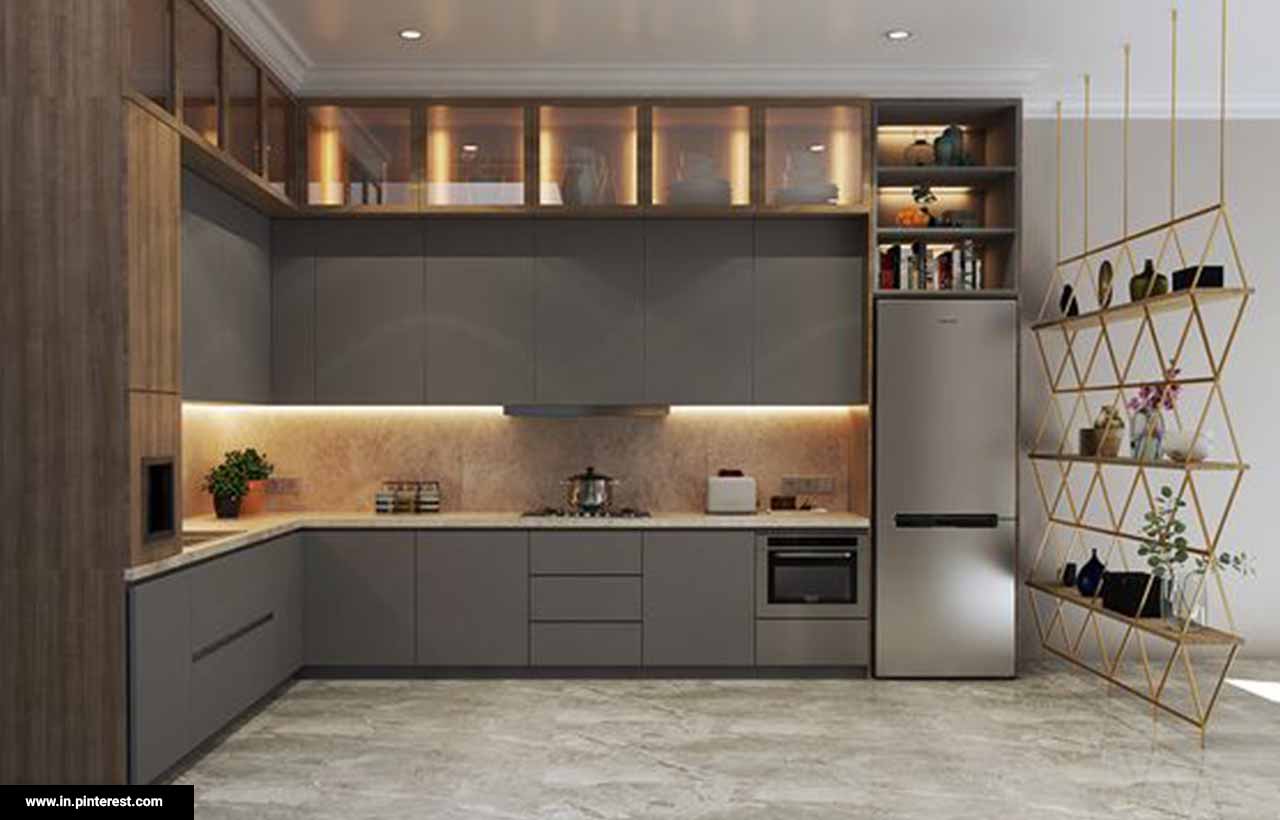
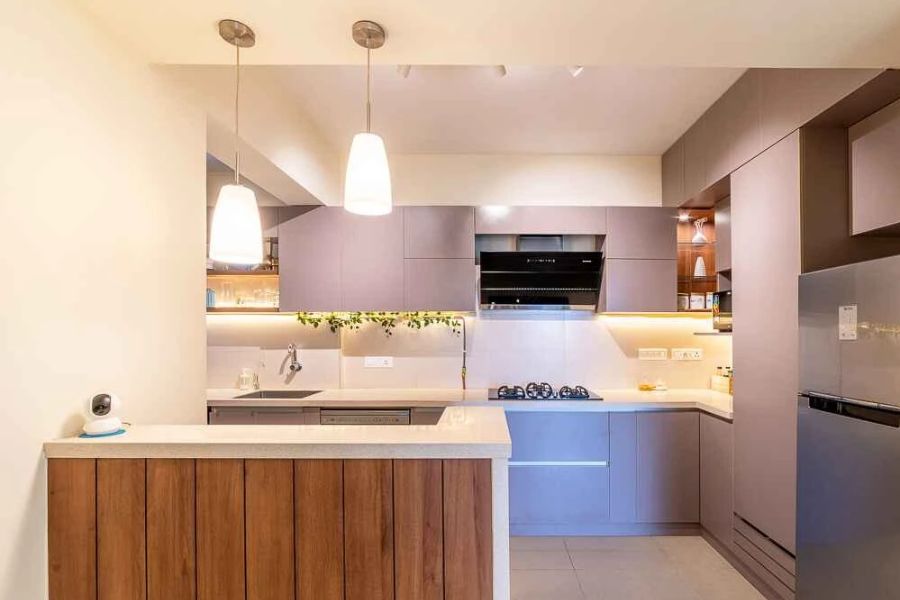
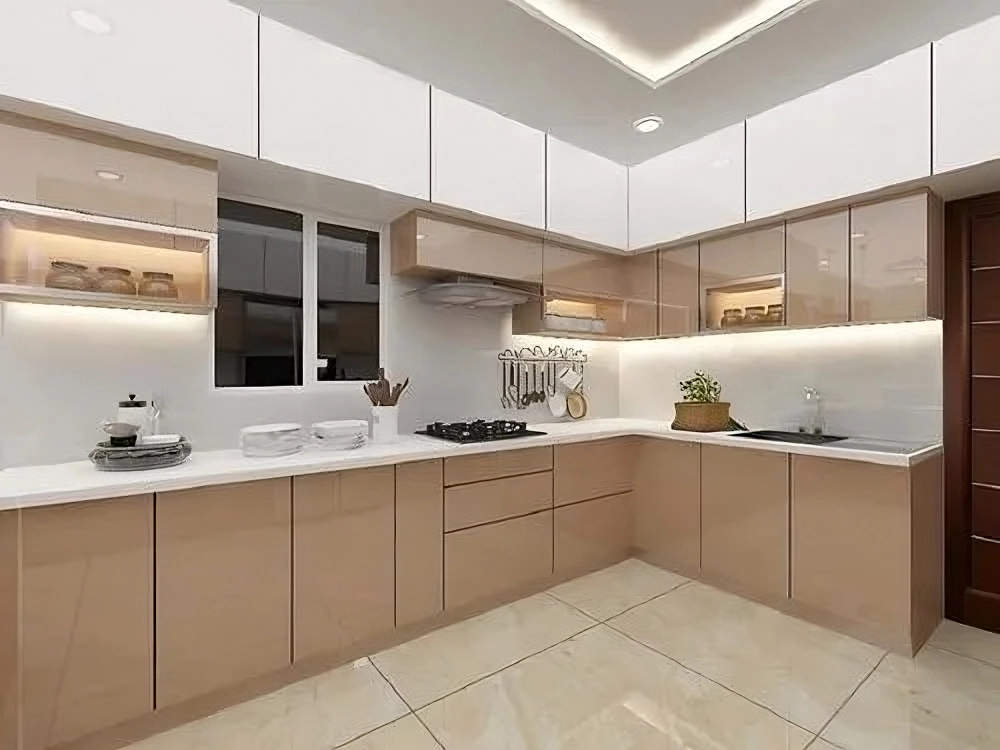
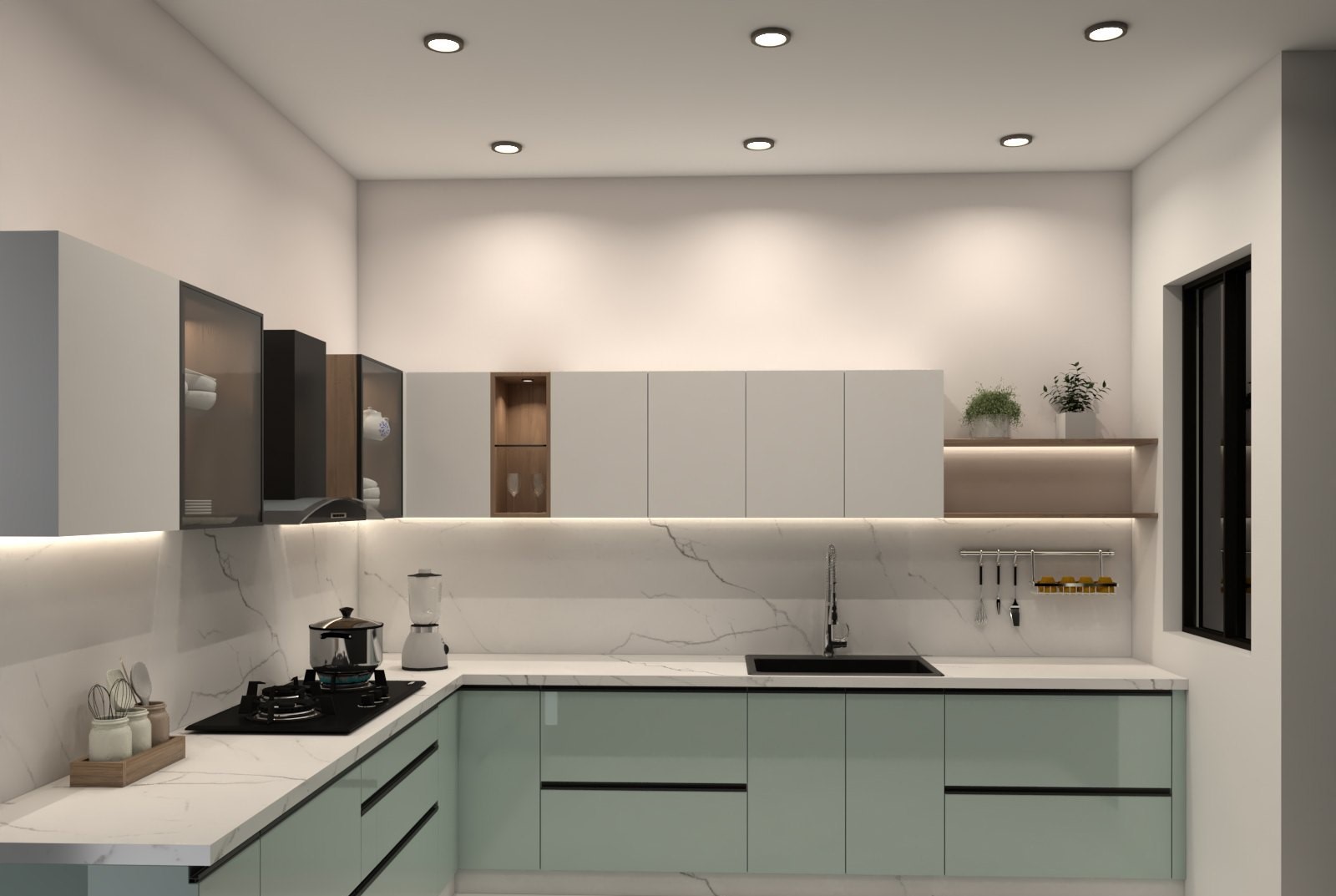
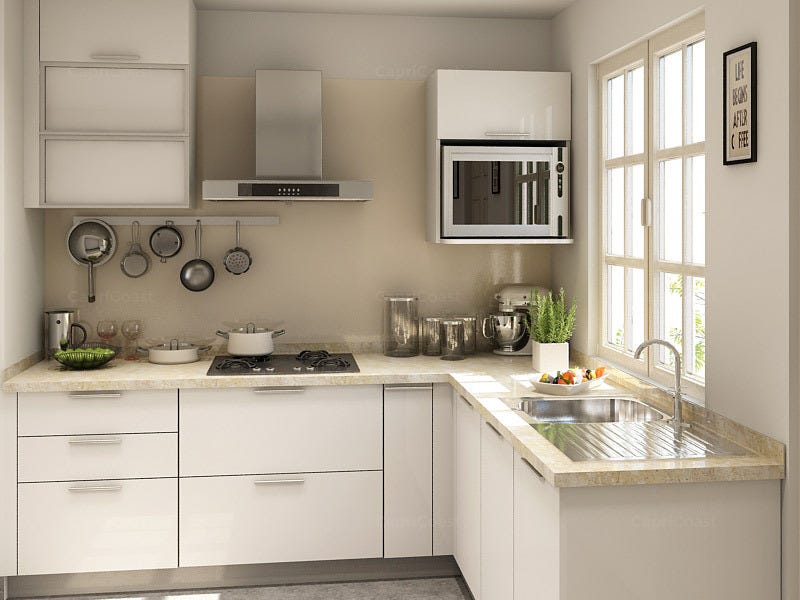
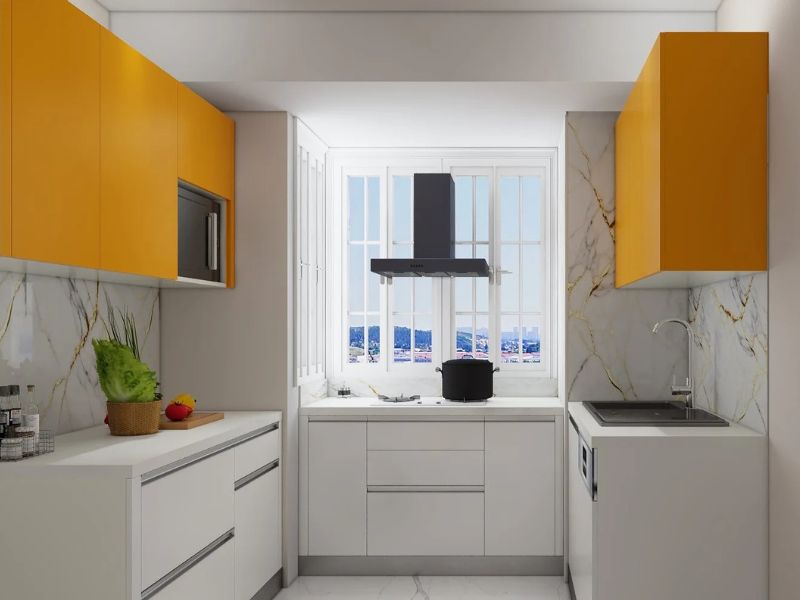
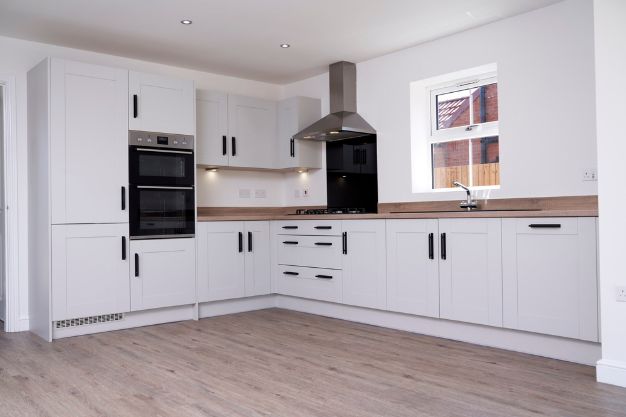
For a standard 2BHK, a standard kitchen size in India typically falls around 8x10 feet, which comes to roughly 80 square feet of working area. This is a sufficient footprint for an L-shaped counter that keeps everything within arm's reach. If you've stepped up to a 3BHK or 4BHK, the ideal kitchen size regularly expands to 10x12 feet or maybe 12x15 feet — enough room to comfortably fit a parallel or U-shaped layout along with a small breakfast counter.
It helps to think of kitchen size as two separate numbers: the floor footprint (length x width of the room) and the counter run (the total straight-line length of your slab and cabinets). A compact kitchen with a smart counter run of 10-12 feet can often out-perform a larger, badly planned one, which is why we always measure both before finalising a layout — and why the best kitchen size isn't always the biggest one.
The purpose isn't just to fill the room with cabinets. It's about the "Work Triangle" — the gap between your stove, your sink, and your fridge. The ideal work triangle perimeter is between 12 and 26 feet. This balance is exactly what makes a modular kitchen in Gurgaon stand out in premium residential projects.
Standard Kitchen Slab Dimensions: Countertops and Sinks
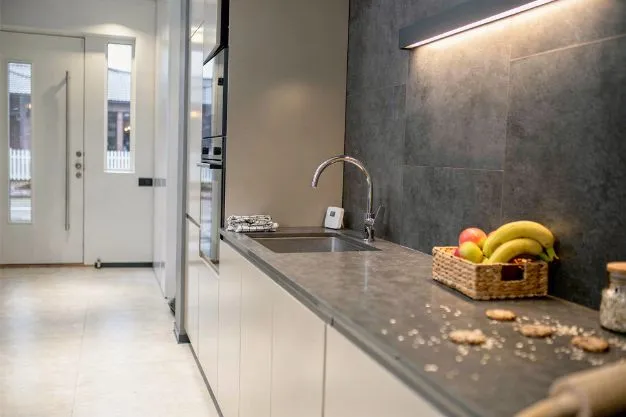
The countertop is the heart of the kitchen. If the kitchen slab standard size is off by even an inch, it can make your daily chores feel like a chore.
What Is the Kitchen Slab Standard Size?
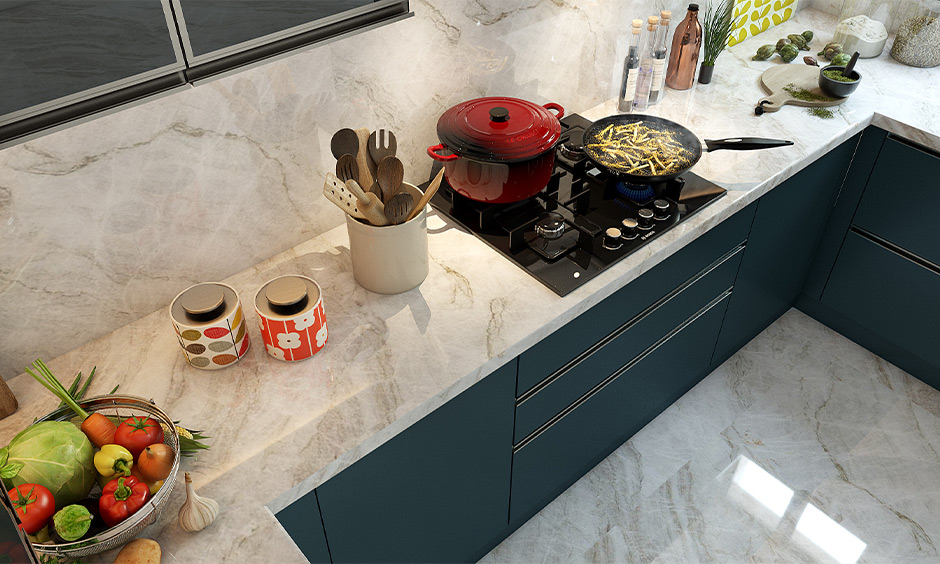
The kitchen slab standard size is 24 inches deep, 32-34 inches high, with a stone thickness of 18-20mm. When people ask us for the kitchen slab size in feet, they usually mean three measurements bundled together:
- Depth (front to back): almost always 24 inches, so the counter comfortably holds your hob, chopping board, and a bit of landing space.
- Height (floor to top of slab): 32 to 34 inches, discussed in detail below.
- Thickness of the stone: typically 18mm to 20mm for granite or quartz, which is enough to prevent cracking under heavy pressure cookers and grinders without adding unnecessary bulk or weight to the cabinets underneath.
Together, these three numbers make up what most designers mean by kitchen slab standard size — and getting all three right matters more than just picking a pretty stone. If you prefer thinking in kitchen dimensions in inches rather than feet, that's a depth of 24", a height of 32"-34", and a slab thickness of roughly 0.7"-0.8".
Kitchen Slab Width
The standard kitchen slab width in India is 24 inches (2 feet). This is almost universally standardised, so if you're converting your kitchen slab size in feet to inches, that's the number to remember. Why? Because this allows you to reach the back of the counter without overextending your shoulder, while still providing enough room for a cooktop and a chopping board in front. Some premium homes opt for a 26-inch slab width if they use oversized commercial-grade hobs, but 24 inches remains the gold standard for most Indian homes.
Countertop Height
Standard kitchen countertop height in India is 32 to 34 inches from the floor. In India, we have a diverse range of heights, but the ideal kitchen size usually accounts for this counter height, which includes the base cabinet, the stone thickness, and the skirting. If the slab is too high, you'll find it hard to stir deep pots (like a heavy Biryani handi); too low, and you'll be leaning forward, which is a recipe for chronic back pain. These specific kitchen slab standard size measurements are the foundation of any ergonomic design.
Standard Size of Kitchen Sink
The standard size of kitchen sink in India is 24 x 18 inches for a single-bowl sink, or 33 x 20 inches for a double-bowl sink, with a depth of 8 to 10 inches. This is most commonly installed in Indian modular kitchens, set into a cutout on the slab, and deep enough to soak large Indian cookware like kadhais and pressure cookers. Getting the standard size of kitchen sink right matters just as much as the slab dimensions themselves, since an undersized sink becomes the most-used and most-frustrating spot in the kitchen. We generally recommend positioning the sink near a window or the counter's midpoint so both sides of the work triangle stay balanced.
Precision for Base & Wall Cabinets
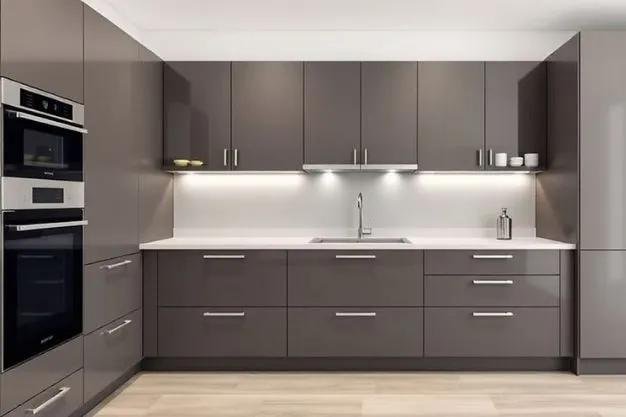
When we talk about the standard kitchen size, we are really talking about the volume of storage.
- Base Cabinets: These sit directly under your slab. They are typically 24 inches deep to match your kitchen slab dimensions. We recommend a mix of wire-basket drawers for grains and deep "tandem boxes" for heavy pots and pans.
- Wall Cabinets: These should be shallower — usually 12 inches deep. This prevents you from hitting your head while leaning over the stove. The gap between the counter and the wall cabinet should be at least 2 feet (24 inches) to ensure you have enough room for appliances like mixers and air fryers.
When planning a modular kitchen in Gurgaon, our designers often use taller wall cabinets (up to 3 feet, or 36 inches) to make use of the high ceilings found in modern high-rises, effectively increasing your storage without eating up floor space.
Elevated Living: Dimensions for Kitchen Islands & Breakfast Counters
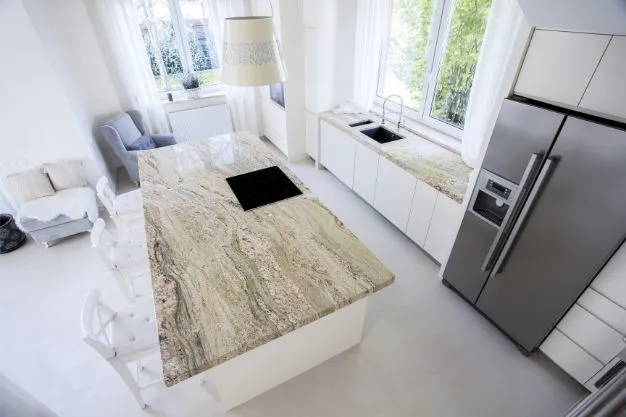
If you have the luxury of space, adding an island is the ultimate style statement. However, an island only works if your standard kitchen size in India allows for it without blocking the flow.
An island should be at least 4 feet long and 2 feet wide (48 x 24 inches). For a breakfast counter, the height is usually raised to 42 inches. This creates a visual tier: the lower level (34 inches) is for prep, and the higher level (42 inches) is for guests to sit with high-stool chairs, keeping them away from the heat and splashes of the cooking zone. This trend is particularly popular for a modular kitchen in Gurgaon where open-plan living is the norm.
Functional Spacing: Backsplashes, Windows, and Aisle Width
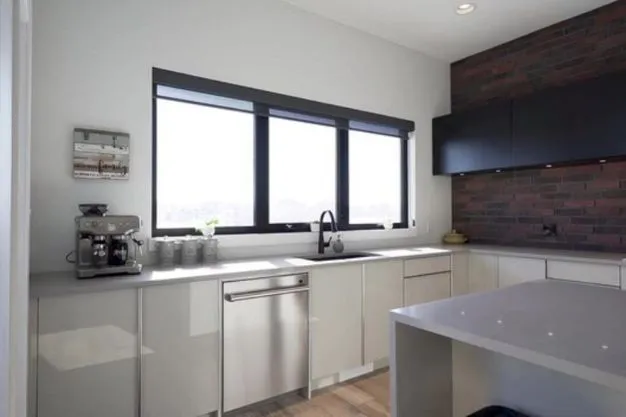
One of the most overlooked kitchen dimensions in inches is the aisle width, the walking space between two counters. The ideal aisle width for a parallel or U-shaped kitchen is 42 to 48 inches (3.5 to 4 feet). If you have a parallel or U-shaped kitchen, this ensures that if one person is at the sink, another can walk behind them without a collision.
For ventilation, a standard kitchen size should include a window of at least 3x4 feet (36 x 48 inches). This isn't just for light; it's for safety. Even with a high-suction chimney, natural cross-ventilation is essential for clearing out the heavy aromas of Indian spices. The ideal kitchen size should always prioritise this airflow to keep the home smelling fresh.
Appliance Integration: Stove, Chimney, and Refrigerators
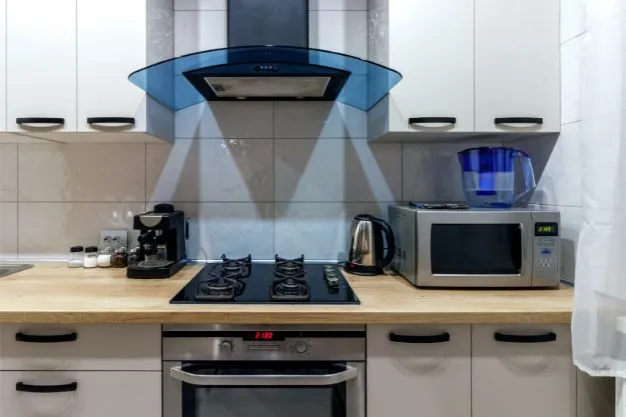
Your appliances shouldn't be an afterthought; they should dictate your kitchen slab standard size.
- Stove to Chimney: There should be a gap of 24 to 30 inches. Any closer, and the chimney becomes a fire hazard; any further, and it won't effectively suck up the grease.
- The Refrigerator Hub: Most Indian families use double-door fridges. Ensure your modular kitchen size leaves a cavity that is at least 3 feet (36 inches) wide and has 2 inches of clearance on all sides for air circulation. Without this "breathing room," your fridge's compressor will work overtime and burn out faster.
- Microwave Placement: To save counter space, we often build microwaves into the tall units at eye level, roughly 15 inches above the main slab.
Consult with the Experts: Why Novella Kitchens?
At Novella Kitchens, we don't believe in "one size fits all." While we observe the same standard kitchen size in India as a baseline, each house in Gurgaon is unique. Our 11,000 sq. ft. cutting-edge manufacturing facility uses precision machinery to ensure that your cabinets fit your unique walls like a glove. With a 10-year guarantee and a dedication to 50+ quality checks, we take the guesswork out of kitchen planning. If you are looking for a reliable modular kitchen in Gurgaon, our experience with local apartment layouts gives us the edge in creating the best kitchen size and layout for your home.
Conclusion: Making Every Inch Count
By adhering to the right standard kitchen size in India, you aren't simply following a trend, you are investing in your personal comfort. From the standard size of kitchen sink that handles your daily dishes to the modular kitchen size that houses your lifestyle's essentials, every dimension matters.
Understanding the ideal kitchen size, and the kitchen slab standard size that sits within it lets you communicate better with your designers and guarantees that your final result is a perfect blend of form and function. At Novella Kitchens, we're here to help you translate those measurements into a beautiful, living reality.
FAQs
1. What is the most common kitchen slab width in India?
The most common kitchen slab width is 24 inches (2 feet). This provides the perfect balance between workspace and reachability for the average Indian user.
2. Is a 7x10 feet space considered a good standard kitchen size?
Yes, a 7x10 feet area is a very efficient standard kitchen size in India for a linear or L-shaped modular layout, common in many urban Indian apartments.
3. Why are kitchen dimensions in India different from Western standards?
Kitchen dimensions in India often prioritise deeper sinks for large utensils and specific counter heights to accommodate traditional cooking methods and the average height of Indian homemakers.
4. What is the ideal gap between the floor and the kitchen slab?
Including the skirting and the stone, the ideal kitchen size translates to a height of roughly 2.8 to 2.9 feet (34 inches) from the floor.
5. What is included in the standard kitchen slab size?
The kitchen slab standard size generally refers to three measurements together: a depth of 24 inches, a height of 32-34 inches from the floor, and a stone thickness of 18-20mm. Knowing all three, not just the length of the counter, is what gives you the true kitchen slab size in feet for your home.
6. What is the standard size of a kitchen sink in India?
The standard size of kitchen sink in most Indian modular kitchens is either a single-bowl sink around 24 x 18 inches or a double-bowl sink around 33 x 20 inches, with a depth of 8 to 10 inches to accommodate large cookware.
7. What is the best kitchen size for a small Indian apartment?
The best kitchen size for a small apartment is around 7x10 feet, laid out as a single-line or L-shaped kitchen with a 24-inch slab depth and a 24-inch aisle-adjacent walkway, this keeps the work triangle tight (under 15 feet) without feeling cramped, since a smaller footprint used well often outperforms a larger, poorly planned one.