How to Choose a Modular Wardrobe for Your Home in Gurgaon
Quick answer: To choose a modular wardrobe in Gurgaon, start with your room size and storage needs. Then pick a type (hinged, sliding, or walk-in), a moisture-resistant core material such as BWP plywood or HDHMR, and quality hardware. Set your budget by finish and configuration, and choose a maker that offers site measurement, 3D design, and installation.
Key takeaways
- Core material matters more than surface finish for how long a wardrobe lasts.
- Sliding wardrobes suit compact bedrooms, hinged ones suit most standard rooms, and walk-ins need a dedicated area.
- Price depends on size, material, finish, hardware, and internal accessories, not just the per-sq-ft rate.
- Measure only after flooring and false ceiling work are final.
- A good quote itemizes materials, hardware brands, and installation.
A wardrobe is one of the few pieces of furniture you open every single day, for ten years or more. Yet most people choose one in a hurry, usually in the last stretch of a home renovation, with a budget that has already been stretched.
After years of planning interiors, I've seen the same pattern repeat. Homeowners pick a finish they love, ignore the core material, and discover three monsoons later that the shutters have swollen or the shelves have started to sag.
This guide walks you through the decisions that actually matter when choosing a modular wardrobe in Gurgaon, in the order you should make them.
What Is a Modular Wardrobe, and How Is It Different from a Carpenter-Made One?
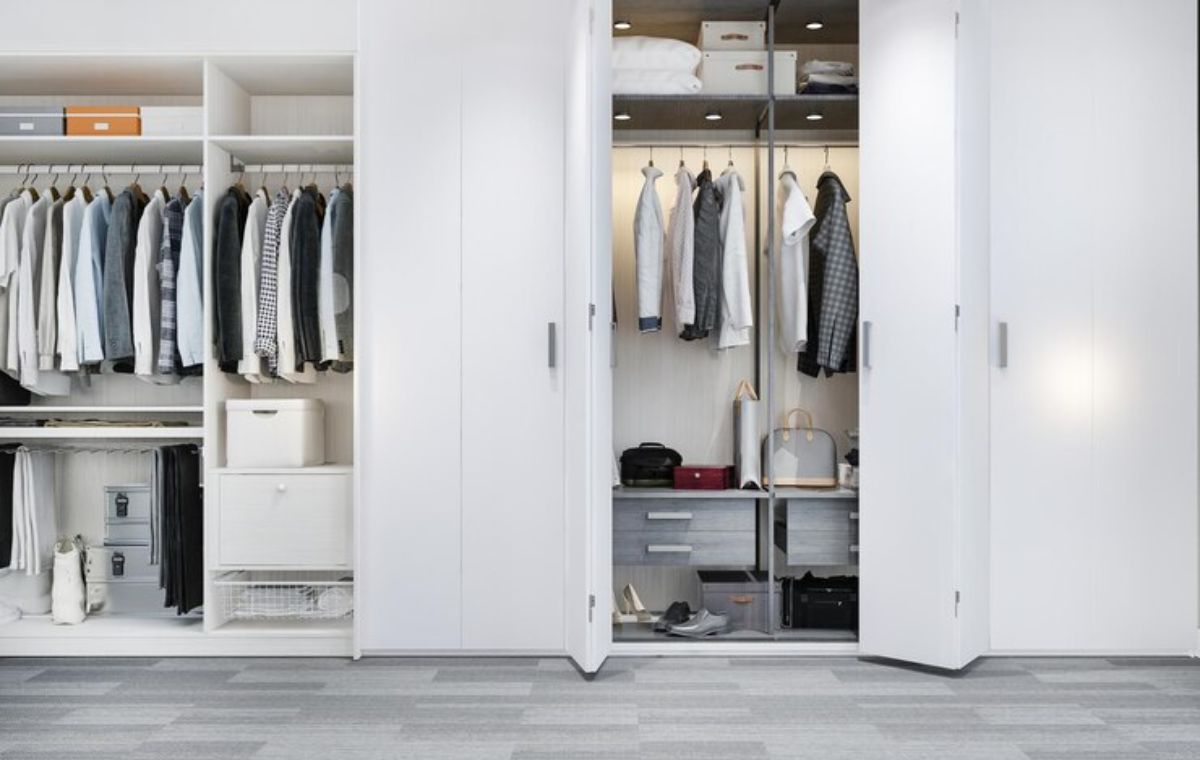
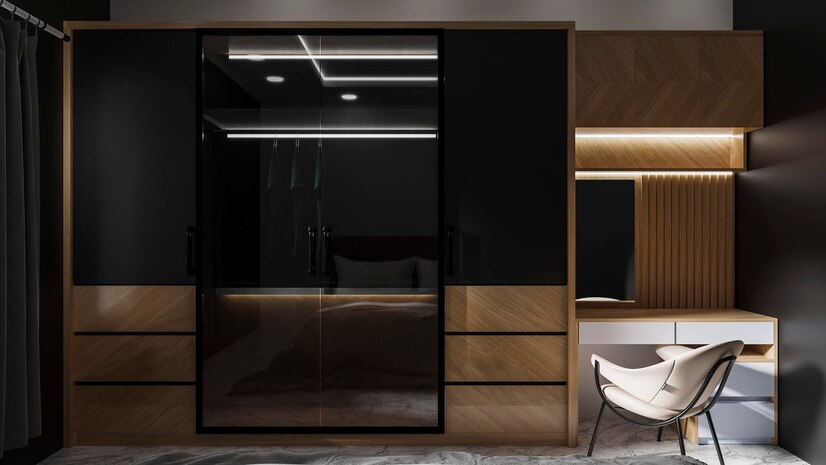
A modular wardrobe is manufactured in a factory as standardized modules (carcass, shutters, shelves, drawers) and assembled at your home. A customized wardrobe goes one step further: the modules are cut to your exact room dimensions, with the finish and internal layout designed around how you live.
The old model, a carpenter building on site, still has its place. But the trade-offs are real.
|
Factor |
Modular Wardrobe |
On-Site Carpenter |
|
Build quality |
Machine-cut, consistent edges and joints |
Depends on the individual carpenter |
|
Finish |
Factory-sealed, uniform edge banding |
Hand-finished, varies |
|
Timeline |
Shorter on site; production happens in parallel |
Longer, with dust and mess at home |
|
Warranty |
Usually offered by the manufacturer |
Rarely written or enforceable |
|
Modification later |
Modules can be added or replaced |
Often means rebuilding |
|
Design preview |
3D visualization before production |
Mostly verbal or sketch-based |
For most Gurgaon homes, especially apartments in societies with strict working hours and noise restrictions, the factory-finished route is more practical. Less cutting and sanding on site means fewer complaints from neighbors and a cleaner handover.
Which Type Suits Your Home: Hinged, Sliding, or Walk-In?
The right type depends first on your room, and only then on your taste.
|
Type |
Best For |
Space Needed |
Pros |
Cons |
|
Hinged |
Standard bedrooms, full interior access |
Needs door-swing clearance (about 2 ft) |
Whole interior visible, widest range of internal layouts |
Doors need clear floor space to open |
|
Sliding |
Compact rooms, tight bed-to-wall gaps |
Slim track footprint |
No swing clearance, clean look |
Only half the width is open at a time |
|
Walk-in |
Large master bedrooms, dedicated dressing areas |
Roughly 35 sq ft or more of usable floor area [Novella to confirm] |
Everything visible at a glance, dressing space |
Needs dedicated space and a larger budget |
Is a Walk-In Wardrobe Possible in a Gurgaon Apartment?
A walk-in wardrobe is more achievable than most people think. You don't need a separate room. Many Gurgaon 3BHK and 4BHK layouts, particularly on Golf Course Road, Golf Course Extension Road, and Dwarka Expressway, have a dressing alcove between the bedroom and the attached bathroom. That alcove is often the ideal place for a walk-in.
Three layouts work best:
- L-shaped: Suits a corner or an alcove. It makes good use of space without feeling enclosed.
- U-shaped: The most storage per square foot, but it needs a minimum width of around 6 ft so you can move comfortably between the two facing sides.
- Parallel (gallery): Works for long, narrow spaces. Keep at least 3 ft between the two runs.
If your bedroom is under 120 sq ft, a floor-to-ceiling sliding wardrobe design with a loft will usually serve you better than a cramped walk-in. A walk-in that feels tight is a wardrobe you'll resent.
Explore Novella's range of modular wardrobes to see layouts across all three types.
Which Materials Work Best in Gurgaon's Climate?
Delhi-NCR is a tough environment for furniture. Summers are dry and dusty, monsoons bring humidity, and winters add temperature swings between heated rooms and cold walls. Ground-floor and builder-floor homes also face a higher risk of dampness and termites.
|
Material |
Moisture Resistance |
Durability |
Cost Tier |
Best Use |
|
BWP/BWR plywood |
High |
Very high |
Premium |
Wardrobes in any room, especially ground floors |
|
HDHMR |
High |
High |
Mid to premium |
Carcass and shutters, good value for money |
|
MDF |
Moderate |
Moderate |
Mid |
Shutters and painted/PU finishes in dry rooms |
|
Particle board |
Low |
Lower |
Budget |
Short-term or rental use only |
The practical rule: invest in the carcass first. A wardrobe with BWP plywood or HDHMR inside and a modest laminate outside will outlast one with a stunning finish on a weak core.
When buying, ask for BIS (ISI)-marked boards and the brand of the core material in writing. Novella uses [materials and brands, Novella to confirm] for its wardrobes.
Choosing a Finish
- Laminate: The best balance of durability, variety, and price. Easy to clean.
- Acrylic: High-gloss and modern. Shows fingerprints, so it needs regular wiping.
- PU/paint finish: Premium and smooth, but costlier and harder to repair if scratched.
- Veneer: Natural wood warmth, but needs more careful maintenance.
- Glass: Striking on sliding shutters, but heavy, so hardware quality matters.
In Gurgaon, where dust settles quickly, matte or textured laminates usually look cleaner for longer than high-gloss options.
How Should You Plan the Internal Layout?
Most dissatisfaction with wardrobes comes from the inside, not the outside. A well-planned interior is what separates a wardrobe that looks good from one that works every morning.
Start by counting what you own. Separate your clothes into three groups:
- Long-hang: sarees, kurtas, coats, gowns (needs about 4.5 to 5 ft of height)
- Short-hang: shirts, trousers, tops (about 3 to 3.5 ft of height)
- Folded: denim, knitwear, T-shirts, bedding
Plan your hanging sections around these numbers rather than splitting the wardrobe evenly.
Internal features worth including:
- Pull-out trouser and tie racks
- Shallow drawers for innerwear and accessories
- A dedicated shoe unit (at least 12 inches deep)
- Jewellery and watch drawers with soft lining
- A loft for out-of-season clothing, suitcases, and festive wear
- Internal LED lighting with a door sensor
Plan for your household:
- Couples: Divide the wardrobe in two with separate drawers and hanging zones to avoid daily friction.
- Families with children: Keep lower sections adjustable so shelves can change as kids grow.
- Senior members: Keep frequently used items between knee and shoulder height, and choose soft-close hardware and good lighting.
Which Hardware Is Worth Paying For?
Hardware is the part of a wardrobe you touch most often, and the part that fails first when quality is compromised.
Where not to compromise:
- Hinges: Soft-close, with a stated cycle rating. Cheap hinges sag within a couple of years.
- Drawer channels: Full-extension, soft-close telescopic channels.
- Sliding tracks and rollers: For sliding wardrobes, this is the single most important component.
Where you can save:
- Handles, since they are easy to replace later
- Decorative accessories you may not use daily
Always ask for hardware brands to be named in your quotation. "Branded hardware" is not a specification. Novella works with [hardware brands, Novella to confirm].
How Much Does a Modular Wardrobe Cost in Gurgaon?
Modular wardrobe price in Gurgaon depends on size, core material, finish, hardware, and internal accessories. As an indicative market range, a modular wardrobe typically costs between ₹1,000 and ₹2,500 per sq ft, with hinged designs at the lower end and sliding or premium-finish designs at the higher end. Walk-in wardrobes are usually quoted as complete projects. [Novella to confirm and replace with current rate card]
|
Wardrobe Type |
Material/Finish Tier |
Approx. Price Range |
|
Hinged |
Laminate on HDHMR/plywood |
₹1,100 to ₹1,800 per sq ft |
|
Sliding |
Laminate or glass, quality tracks |
₹1,400 to ₹2,400 per sq ft |
|
Premium (PU, acrylic, veneer) |
BWP plywood carcass |
₹2,000 per sq ft and above |
|
Walk-in |
Depends on layout and finish |
Quoted per project |
What Drives the Price?
- Size and height: Floor-to-ceiling designs with a loft cost more than standard-height units.
- Core material: BWP plywood costs more than HDHMR or MDF.
- Finish: Laminate is the most economical, and PU and veneer cost more.
- Hardware: Soft-close systems, premium channels, and sliding mechanisms add up quickly.
- Internal accessories: Pull-outs, lighting, and specialty drawers are priced individually.
- Installation and site conditions: Complex layouts, extra cutting, or high-rise delivery logistics can affect cost.
Sample Cost Scenarios (Indicative)
- 6 ft × 7 ft hinged wardrobe (about 42 sq ft): roughly ₹46,000 to ₹76,000
- Sliding wardrobe for a master bedroom (8 ft × 8 ft, about 64 sq ft): roughly ₹90,000 to ₹1.5 lakh
- Mid-size walk-in: commonly in the range of ₹2.5 lakh to ₹5 lakh, depending on layout and finish
How to Get an Accurate Quote
Share your room dimensions, a photo of the wall, your storage list, and your preferred finish. A good quote should itemize the core material and brand, finish, hardware brands, internal accessories, loft, installation, and warranty. If any of these are missing, ask for them before you pay a token amount.
What Is the Process from Design to Installation?
- Site visit and measurement: A designer measures the space and notes electrical points, windows, and ceiling details.
- Design and 3D visualization: You see the layout and finish before anything is produced.
- Material and finish selection: Core, shutters, hardware, and accessories are finalized.
- Quotation and confirmation: An itemized quote is shared and signed off.
- Factory production: Modules are manufactured to your measurements.
- Delivery and installation: Assembly is done at your home. Check your society's rules on delivery timing and lift usage.
- Handover and inspection: You check alignment, hardware, and finishing before sign-off.
How Do You Choose the Right Modular Wardrobe Maker in Gurgaon?
Use this checklist whether you choose Novella Kitchens or anyone else:
- Written warranty: What does it cover, and for how many years?
- Material transparency: Can they name the board brand and show BIS marking?
- Named hardware brands: Specified in the quote, not described vaguely.
- 3D design before purchase: You should approve the design before production starts.
- In-house installation team: Not outsourced to unknown contractors.
- After-sales service: Who do you call if a hinge or channel fails in year three?
- Portfolio and reviews: Completed Gurgaon projects, not just stock images.
- Showroom or experience centre: A place to touch the materials and test the hardware.
Common Mistakes to Avoid
- Measuring too early. Flooring, false ceilings, and wall treatments change final dimensions. Measure after they are done.
- Ignoring door-swing clearance. A hinged door that hits the bed or a wall is a daily irritation.
- Skipping the loft. The upper 2 feet of wall are valuable storage for suitcases and seasonal items.
- Choosing finish over core. A beautiful surface on a weak board will not last.
- Not itemizing hardware. Vague quotes often hide cheaper components.
- Over-designing the interior. Too many specialty drawers waste space you could use for hanging or shelving.
- Forgetting lighting and ventilation. A dark, closed wardrobe traps moisture and odor. Add lighting and consider small vents or moisture absorbers.
Final Thoughts
Choosing a modular wardrobe in Gurgaon comes down to a clear sequence: understand your space, choose the right type, protect the core with good materials, invest in hardware, and demand clarity in the quote. Get those five right and the finish becomes the easy, enjoyable part.
Also Read: Wardrobe Organizer Ideas: From Clutter to Your Dream Close
Frequently Asked Questions
Q1 What is the average price of a modular wardrobe in Gurgaon?
Most modular wardrobes in Gurgaon cost between ₹1,000 and ₹2,500 per sq ft, depending on material, finish, and hardware. Walk-in wardrobes are priced per project. Always request an itemized quote.
Q2 Is a modular wardrobe better than a carpenter-made wardrobe?
For most homes, yes. Modular wardrobes offer consistent factory finishing, quicker installation, cleaner sites, and written warranties. A carpenter may suit unusual shapes or very tight budgets, but quality varies more.
Q3 How much space do I need for a walk-in wardrobe?
A small L-shaped walk-in can work in roughly 35 to 40 sq ft. A comfortable U-shaped layout generally needs a width of at least 6 ft. If your space is smaller, a sliding wardrobe with a loft is usually the better choice.
Q4 Which material is best for a wardrobe in Gurgaon's climate?
BWP/BWR plywood and HDHMR perform best against humidity, dust, and termites. Particle board is the least suitable, especially for ground-floor or builder-floor homes.
Q5 How long does it take to install a modular wardrobe?
Installation usually takes one to three days on site, after design approval and factory production. The full process often takes several weeks.
Q6 Can a modular wardrobe be customized to any size?
Within limits, yes. Modules are made to your measurements, with adjustable widths and heights. Very unusual shapes, such as sloped ceilings, may need special modules.