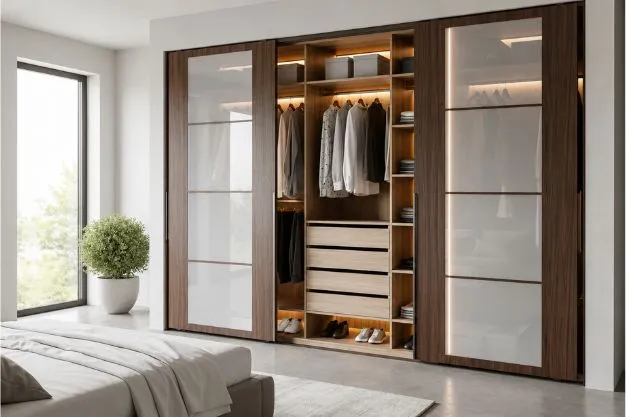
Cupboard Design for Bedroom: A Complete 2026 Guide for Gurgaon Homes
Quick Answer
The right cupboard design for a bedroom depends mostly on room size and how the space gets used, not on following a single trend. Sliding-door cupboards suit compact bedrooms because the doors don't need swing clearance. Openable-shutter cupboards give full, unobstructed access and work best when there's room to spare. Walk-in and modular dressing-unit cupboards suit primary bedrooms with extra floor area. Across all three, 2026's defining shift is toward handle-less flush fronts, built-in lighting, and cupboards designed to read as part of the room's architecture rather than as standalone furniture.
Table of Contents
- Cupboard or Wardrobe? Why the Words (and the Decision) Matter
- What Are the Main Types of Cupboard Designs for a Bedroom?
- Cupboard Design Types at a Glance
- Which Cupboard Design Works Best for a Small Bedroom?
- What Materials Should You Choose for a Bedroom Cupboard in 2026?
- What Cupboard Design Trends Are Shaping Bedrooms in 2026?
- How Do You Choose the Right Cupboard Design for Your Bedroom?
- Why Choose Novella Kitchens for Your Bedroom Cupboard Design?
- FAQs
Finding the right cupboard design for bedroom storage is one of the few furniture decisions you'll live with for a decade or more, which is exactly why it deserves more thought than picking whatever the carpenter suggests last. In Gurgaon and across Delhi NCR, bedroom sizes vary widely, from compact rooms in mid-rise apartments to generously proportioned primary suites in independent floors, and the right cupboard design changes considerably depending on which one you're working with. It also matters how you actually use the space: a household storing mostly daily-wear clothing has very different needs from one that wants a dedicated spot for festive wear, luggage, and out-of-season items. This guide walks through the cupboard types available in 2026, the materials worth considering, the trends actually worth paying attention to, and how to match a design to your bedroom rather than the other way around.
Cupboard or Wardrobe? Why the Words (and the Decision) Matter
In India, “cupboard,” “wardrobe,” and occasionally “almirah” are used to mean the same thing: a built-in or modular storage unit for clothes, usually fitted along one wall of a bedroom. There's no meaningful product difference behind the terminology, so don't let it complicate the decision. What does matter is a distinction interior designers actually use: built-in (constructed on-site, fixed to the wall and ceiling) versus modular (factory-manufactured in sections, then assembled on-site). Modular cupboards, what most manufacturers in Gurgaon and Delhi NCR, including Novella Kitchens, specialize in, offer more consistent finish quality, faster turnaround, and the ability to disassemble and reassemble the unit if you relocate.
What Are the Main Types of Cupboard Design for Bedroom?
Most cupboard designs fall into one of five categories, distinguished mainly by how the doors open and how much floor space the unit needs to function.
Sliding-Door Cupboards
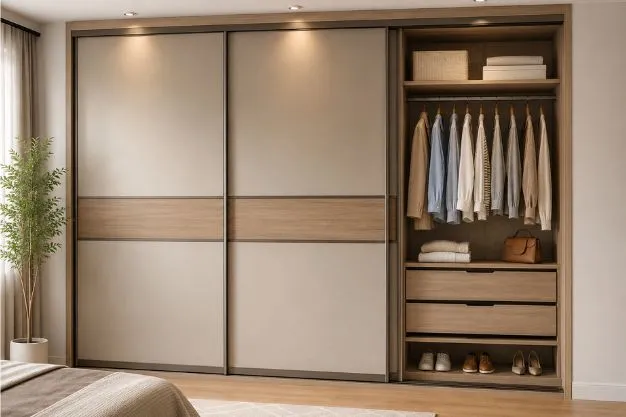
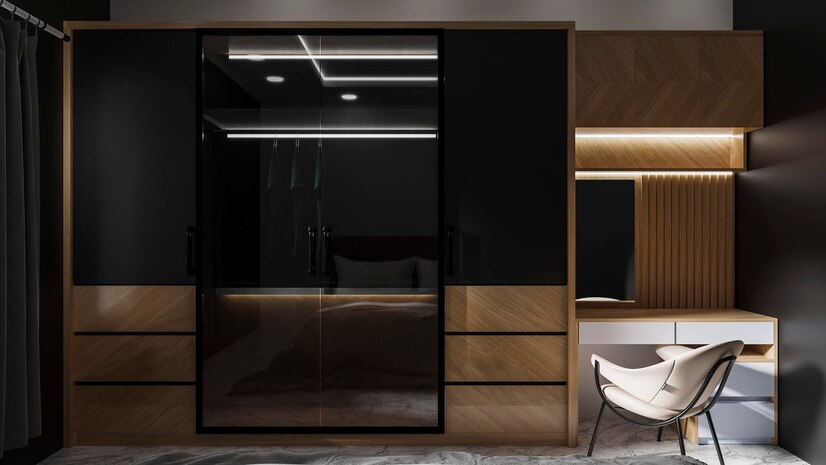
Sliding-door cupboards run on tracks fitted at the top and bottom of the frame, so the doors glide sideways instead of swinging outward. That makes them the standard choice for compact bedrooms, walkways, or any room where furniture sits close to the cupboard. Mirror or frosted-glass panels on sliding doors do double duty, they let you skip a separate dressing mirror and visually open up a small room. The trade-off is that you can only access one section at a time, since the doors overlap rather than opening fully.
Openable-Shutter Cupboards
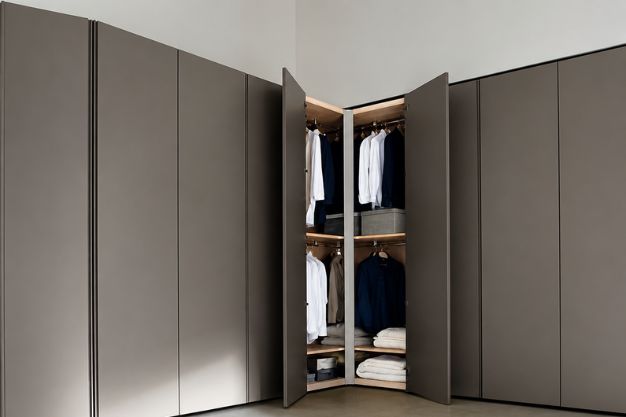
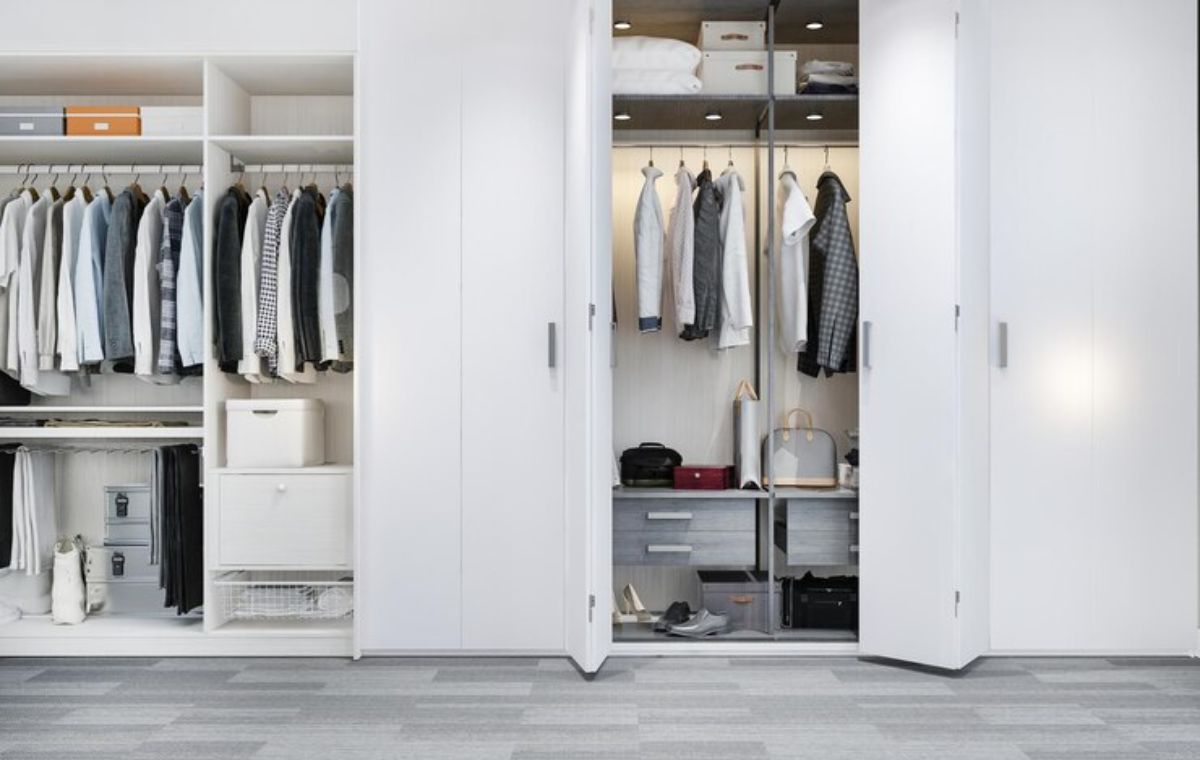
Openable-shutter cupboards use hinged doors that swing outward, giving full, simultaneous access to the entire interior, useful if you're getting dressed in a hurry or sharing the unit with a partner. They typically include hooks and pockets built into the shutters for belts, ties, or scarves, and the hinges are simple to repair or tighten if they loosen over time. The catch is floor clearance: the doors need open space in front of them, so this design suits bedrooms where the cupboard isn't positioned directly opposite a bed or another piece of furniture.
Walk-In Closet Cupboards
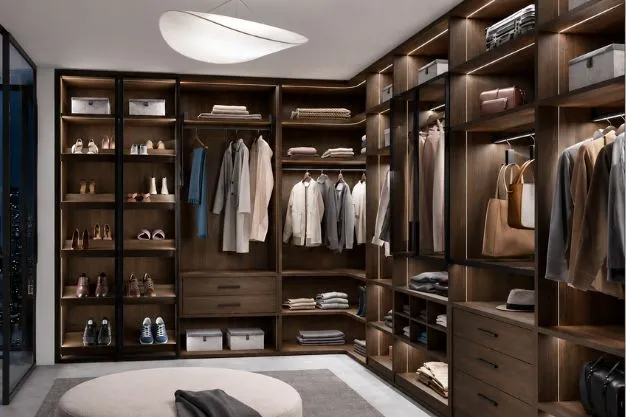
A walk-in closet turns an entire nook, alcove, or small room into dedicated storage, combining wall-mounted shelves, hanging rails, and drawers, some open, some behind sliding or hinged doors. Because there's room to move inside the unit itself, walk-in closets often include a full-length mirror, a bench, or even a small dressing table, turning a functional space into something closer to a private dressing room. They need the most floor area of any cupboard type, which is why they show up mainly in primary bedrooms or homes with a spare room to convert, rather than in standard-sized bedrooms.
Modular Dressing-Unit Cupboards
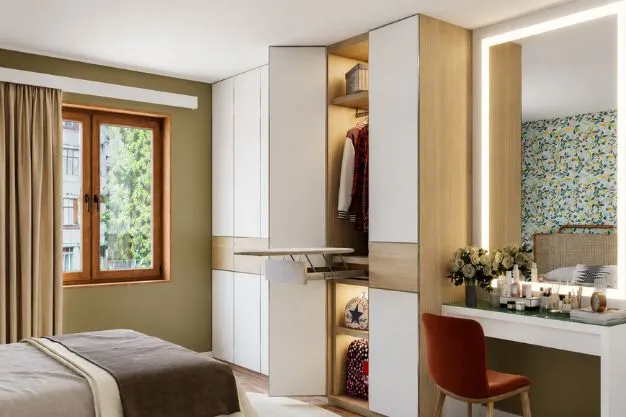
This category covers the sleeker, multifunctional cupboard styles often labeled “Italian” or “German” in catalogs, not because the cupboard is imported, but because the look borrows from those design traditions: flush surfaces, minimal hardware, and a finish that can extend from the bedroom into an adjoining dressing area or even a drawing room. They tend to combine clothes storage with a vanity section, drawers, or a TV unit into one continuous run, which makes them well-suited to smaller flats where a single piece of furniture has to do several jobs at once.
Loft and Overhead Storage Add-Ons
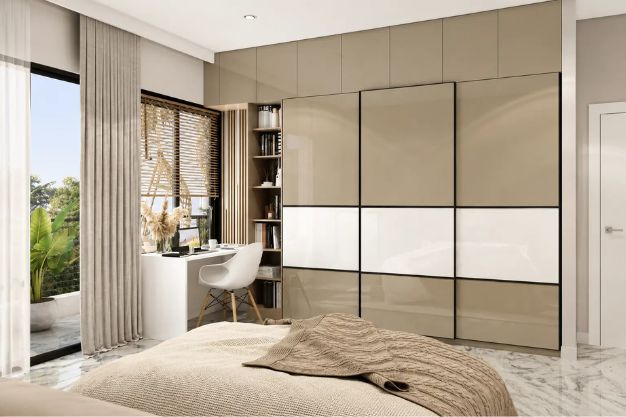
Rather than a standalone category, loft units are an add-on, extra cabinets built above the main cupboard, right up to the ceiling, for items you rarely access: out-of-season clothing, luggage, or extra bedding. They make sense in any bedroom where the cupboard doesn't already run floor-to-ceiling, since the alternative is leaving that upper wall space empty. Pull-down rods or step stools become useful here, since the whole point is storing things you don't need daily access to.
Cupboard Design For Bedroom: Type at a Glance
|
Design |
Best For |
Door Type |
Floor Space Needed |
Standout Feature |
|
Sliding-Door |
Compact bedrooms, tight layouts |
Sliding (track-mounted) |
Minimal |
Mirror-panel option doubles as a dressing mirror |
|
Openable-Shutter |
Bedrooms with clearance to spare |
Hinged |
Moderate (door swing) |
Full, simultaneous access; built-in hooks and pockets |
|
Walk-In Closet |
Primary bedrooms, spare rooms |
Mixed (open, sliding, or hinged) |
High |
Room to dress inside the unit itself |
|
Modular Dressing-Unit |
Smaller flats, multi-use rooms |
Flush hinged or sliding |
Moderate |
Combines storage, vanity, and TV unit in one run |
|
Loft Add-On |
Any cupboard without full ceiling height |
Hinged (overhead) |
None (built above main unit) |
Captures otherwise unused vertical space |
Which Cupboard Design Works Best for a Small Bedroom?
Small bedrooms benefit from decisions that reduce visual clutter as much as decisions that save floor space. Sliding doors are the obvious starting point, since they eliminate the need for swing clearance altogether. Beyond that, a few choices make a measurable difference: handle-less, flush-fronted doors remove the small shadows and protrusions that make a wall of storage feel heavier than it is; a floor-to-ceiling cupboard, rather than a unit that stops short of the ceiling, uses vertical space that would otherwise sit empty above a shorter cabinet; and a single light, neutral finish, rather than mixed colors or busy patterns, keeps the cupboard from visually competing with the rest of the room. Built-in lighting inside the unit also helps in small bedrooms specifically, since these rooms often have only one window and limited ambient light reaching into a deep cupboard.
What Materials Should You Choose for a Bedroom Cupboard in 2026?
The core structure of a modular cupboard is almost always engineered wood, either MDF (medium-density fibreboard) or particle board, chosen for dimensional stability and resistance to warping compared to solid wood, which expands and contracts more with humidity. For Delhi NCR's seasonal humidity swings, this matters more than it might in a drier climate. The visible finish is a separate decision from the core material: laminate finishes are durable and available in the widest range of colors and textures, veneer gives a genuine wood-grain look at the cost of slightly more maintenance, and lacquered or high-gloss finishes create the smooth, handle-less look that's currently popular but show fingerprints more readily and need more careful cleaning.
Glass and metal show up as accents rather than structural materials, glass on sliding-door panels or display sections, metal in handles, frames, or trim. On the sustainability side, look for boards with low-VOC adhesives and finishes, since a closed cupboard with poor ventilation can concentrate off-gassing from cheaper materials over time. This has become a more common question from buyers in 2026 than it was even a couple of years ago, and most established manufacturers can now confirm which board and finish combinations meet lower-emission standards.
What Cupboard Design Trends Are Shaping Bedrooms in 2026?
Trend-chasing is a poor reason to choose a cupboard design on its own, but it's worth knowing what's actually changed in 2026 so a five-year-old design doesn't look dated the moment it's installed.
- Architectural integration, not standalone furniture. The clearest shift this year is away from cupboards that look like furniture placed against a wall, and toward cupboards built into the architecture of the room itself, running wall-to-wall, fitted into existing alcoves, or following an angled ceiling rather than stopping at a standard height. The intent is for the storage to disappear into the room rather than announce itself.
- Handle-less, flush fronts. Push-to-open mechanisms and recessed grip channels have largely replaced visible handles on newer designs, particularly for smaller bedrooms, where even small protrusions add up visually.
- Built-in technology. Motion-sensor lighting, soft-close hinges and sliding tracks, and the occasional built-in charging point have moved from a premium add-on to something buyers ask about by default, even on mid-range projects.
- Cupboard-plus-dressing integration. Rather than a separate dressing table, more 2026 designs fold a vanity section, a backlit mirror, a narrow counter, sometimes a stool, directly into one end of the cupboard run, which uses less wall space overall than two separate pieces of furniture.
- A return to warmth and color. After several years dominated by all-white and all-grey palettes, 2026 has brought a noticeable swing toward warmer wood tones, sage and earthy greens, and the occasional bold panel used as a deliberate accent rather than across the whole unit.
- Sustainable material requests. More buyers are specifically asking about low-VOC finishes and responsibly sourced boards, reflecting a broader shift toward treating material sourcing as a real factor in the decision rather than an afterthought.
How Do You Choose the Right Cupboard Design for Your Bedroom?
Start with measurements, not inspiration photos. The dimensions of the wall, the ceiling height, and, critically , how much floor clearance exists in front of the proposed cupboard location will eliminate some design options before aesthetics even enter the conversation. A cupboard positioned across from a bed with only a foot of clearance simply isn't a candidate for openable shutters, regardless of how the design looks in a catalog.
Next, take an honest inventory of what actually needs storing. A household with two people sharing daily-wear clothing has different shelf-to-hanging-space ratios than one storing seasonal wardrobes, luggage, or a child's growing clothing collection, and getting this wrong is the most common reason a newly installed cupboard feels insufficient within a year or two.
Think about how the room might change. Knock-down (disassemble-and-reassemble) construction, which most modular cupboards use, makes relocation easier, but it's still worth designing with some flexibility if the household composition is likely to shift, a nursery becoming a study, for instance.
Finally, factor in ergonomics: shelves and hanging rods positioned at a comfortable reach reduce daily friction far more than an extra storage compartment that requires a step stool every time it's used.
Why Choose Novella Kitchens for Your Bedroom Cupboard Design?
Novella Kitchens designs and manufactures its modular cupboards at its own facility in Gurgaon rather than outsourcing production, which keeps quality control and finish consistency in-house from the first design sketch to final installation. The range covers the categories above, openable-shutter, sliding-door, and walk-in designs, built from engineered wood with a choice of laminate, veneer, glass, and metal-accented finishes, and using knock-down construction that makes a future move or reconfiguration straightforward.
Beyond the manufacturing side, Novella's design team works through a structured process for every cupboard project: a detailed needs assessment, an on-site measurement visit, 3D design review at the studio, and a meticulous material selection stage before manufacturing begins, the same process the brand uses for its modular kitchens. Specialized storage options, including pull-out trouser racks, jewelry organizers, and concealed compartments, are available across the range, along with after-sales support for any design-related questions once the cupboard is installed.
You can browse Novella's full range of modular wardrobe designs, or book a consultation at their Gurgaon showroom or design studio, to see which configuration fits your bedroom.
Conclusion
There isn't a single “best” cupboard design for bedroom needs in general, there's a best design for your specific bedroom, and that depends on how much floor clearance you have, what you actually need to store, and how long you plan to stay in the space. Sliding doors solve for tight rooms, openable shutters solve for full access, and walk-in or modular dressing units solve for bedrooms with room to spare. What's changed for 2026 isn't the basic decision so much as the details: handle-less fronts, built-in lighting, and cupboards that blend into the room's architecture rather than sitting as a separate block of furniture.
If you're at the stage of comparing layouts and materials rather than just browsing photos, working with a manufacturer that designs and builds in-house, measuring your specific room rather than fitting a catalog design into it, tends to produce a cupboard that still feels right years later. Novella Kitchens' design team can walk through these trade-offs for your bedroom specifically at their Gurgaon showroom or during a design consultation.
FAQs
Q1 What's the difference between a cupboard and a wardrobe?
None, functionally. In India, “cupboard” and “wardrobe” are used interchangeably for the same type of bedroom storage furniture. The distinction that actually matters is between built-in (constructed on-site) and modular (factory-made in sections and assembled on-site), not between the two words.
Q2 Which cupboard design is best for a small bedroom?
Sliding-door cupboards generally work best for small bedrooms, since the doors don’t need swing clearance. Pairing them with a handle-less, flush front and a floor-to-ceiling height makes the most of limited wall space without adding visual bulk.
Q3 Is a sliding or openable cupboard better?
Neither is universally better, it depends on floor clearance. Sliding doors suit bedrooms with limited open space in front of the cupboard, since they glide rather than swing outward. Openable shutters need that clearance but offer full, simultaneous access to the entire interior, which some households prefer.
Q4 What materials are used in modular bedroom cupboards?
The structural core is typically engineered wood, MDF or particle board, chosen for stability against humidity. The visible finish is a separate choice: laminate, veneer, or lacquer, sometimes combined with glass or metal accents on doors and trim.
Q5 What is a standard cupboard depth for hanging clothes?
Around 600mm (roughly 24 inches) is the industry-standard depth for a hanging section, which comfortably accommodates clothes on hangers without the doors bulging or rubbing. Shelving and drawer sections can be shallower.
Q6 Can a modular cupboard be moved if I relocate?
Yes. Most modular cupboards, including Novella’s, use knock-down construction, meaning the unit can be disassembled and reassembled at a new address rather than rebuilt from scratch.
Q7 How do I maintain a bedroom cupboard long-term?
Routine cleaning with a soft, dry or slightly damp cloth is usually enough. Sliding tracks benefit from an occasional check to keep them free of dust, and hinges on openable shutters should be checked periodically and tightened if they loosen.